Two speeds of charging. Slow charging uses the ordinary alternating current (AC) from the mains, and takes hours. It suits a home or an office car park. Fast charging supplies direct current (DC) straight to the battery, and takes tens of minutes. It suits highways and busy city sites.
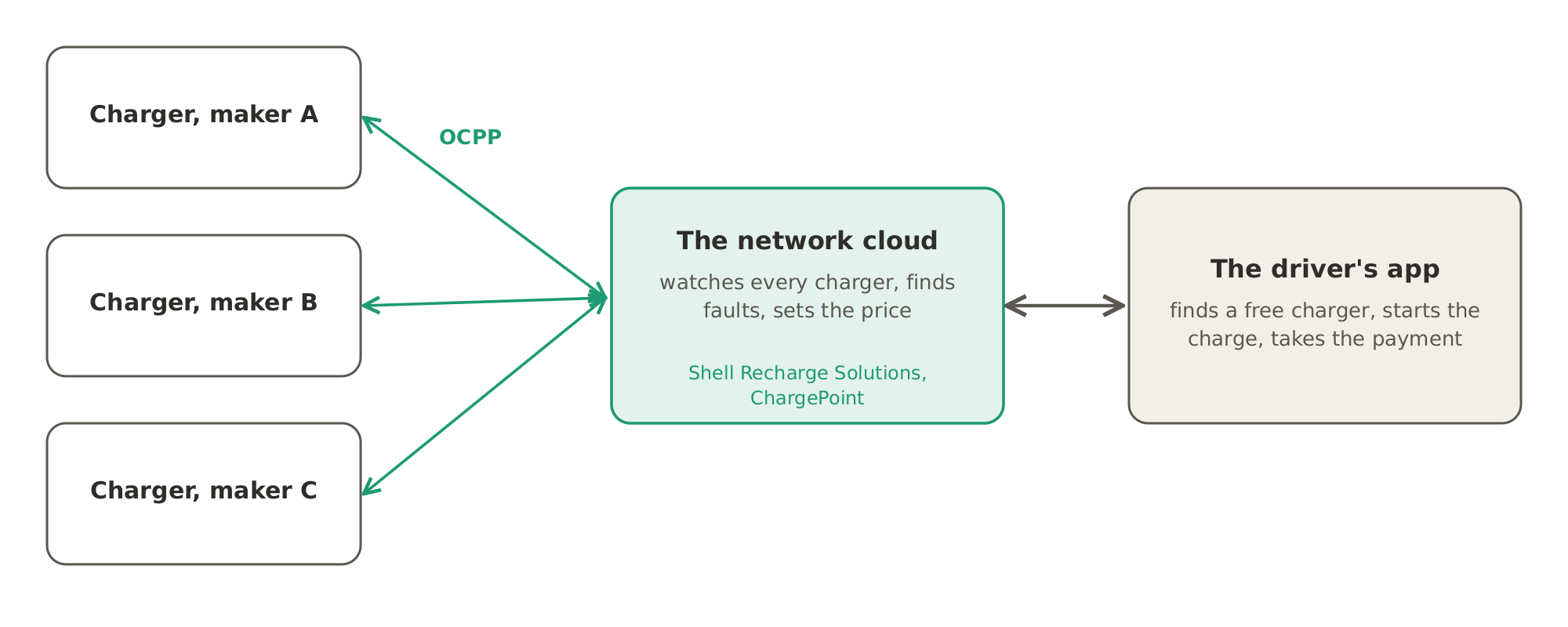
A charging network is mostly software. The charger itself is hardware, but running thousands of them is a software job:
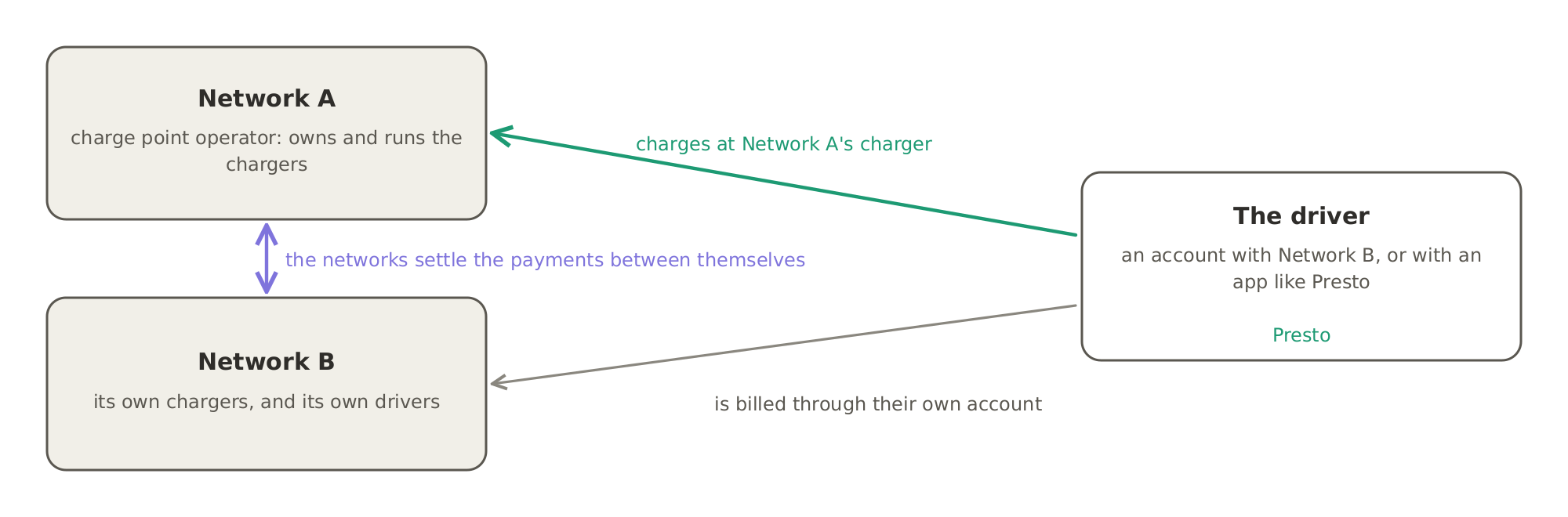
Two roles, and roaming. The company that owns and runs chargers is called a charge point operator. The company whose app and account the driver uses is called a mobility service provider. Sometimes they are the same company, and sometimes not. Roaming lets a driver use another network's charger with their own account, as a mobile phone roams on another operator's network. The networks then settle the payments between themselves.
How the money flows. A charging network earns for each unit of electricity it sells, or for each minute of charging. Chargers are expensive, so a network earns back its cost only if its chargers are used often. Some companies also sell charging software to others who own chargers, such as fuel stations, offices and fleets.
Battery swapping. In India, many electric two- and three-wheelers use battery swapping. The rider does not own the battery. They pay for each swap, or a monthly fee. This makes the vehicle cheaper to buy, and a swap takes far less time than a charge.
Every company named here has posted software engineering jobs in India. Famous companies that don't actively hire software engineers in India are left out.
Keep reading, free
One more section is on this page: Charging networks, roaming and swapping. Sign in to read it here, in full.
Continue with Google- Charging networks, roaming and swapping
Charging networks
Roaming and payment
Battery swapping
Millions of vehicles charging at the same time can strain the grid. With smart charging, the network decides when each vehicle charges. A car can even send power back to the grid. Together, the vehicles become a resource for the grid rather than a strain on it. AI models forecast demand and prices. India's swapping networks, which charge batteries in bulk, are an early version of the same idea.
Who these companies hire, and for what, is on What automotive and mobility companies hire for.