How the grid works. Electricity travels from the power plant to the home in three stages:
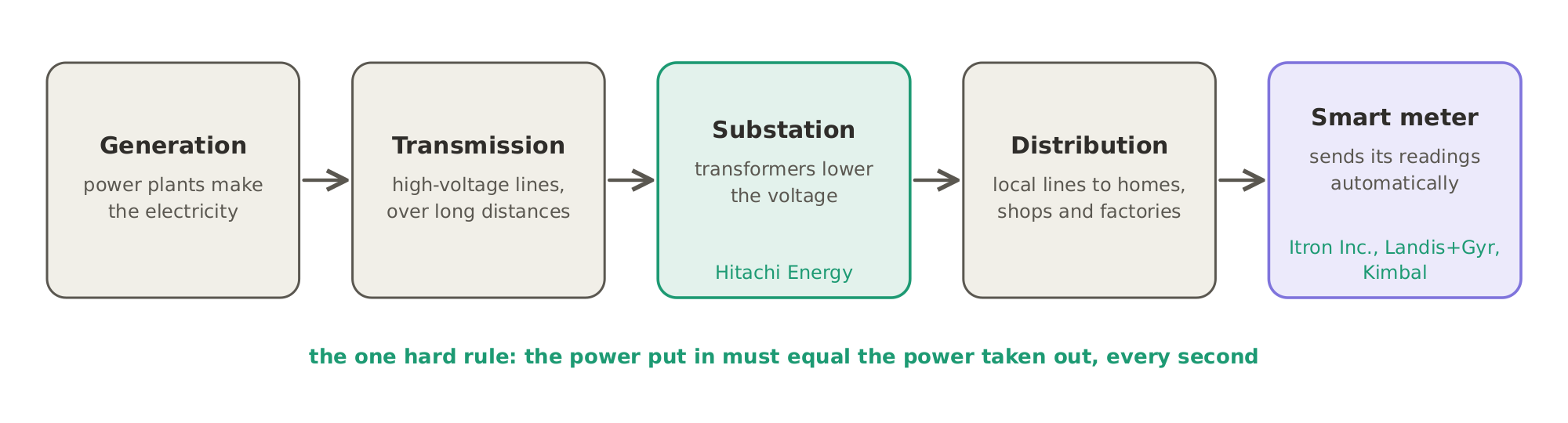
The grid has one hard rule. The power put in must equal the power taken out, every second. If the two drift apart, equipment trips and the lights go out. So the grid has to be watched and controlled all the time. That is its nervous system: sensors, meters and control software.
Who buys. The buyers are utilities, the companies that run the grid and sell electricity. In India, the utilities that supply homes are called distribution companies, or discoms. Most are owned by state governments, and they buy through tenders.
Smart meters. A smart meter records how much power a home uses and sends the readings over a network. Nobody has to visit to read it. It can also work as a prepaid meter, which is recharged like a mobile phone. India is installing a quarter of a billion smart meters under its national programme. It is one of the largest roll-outs in the world. Discoms want them because they lose a lot of money to theft and to unpaid bills.
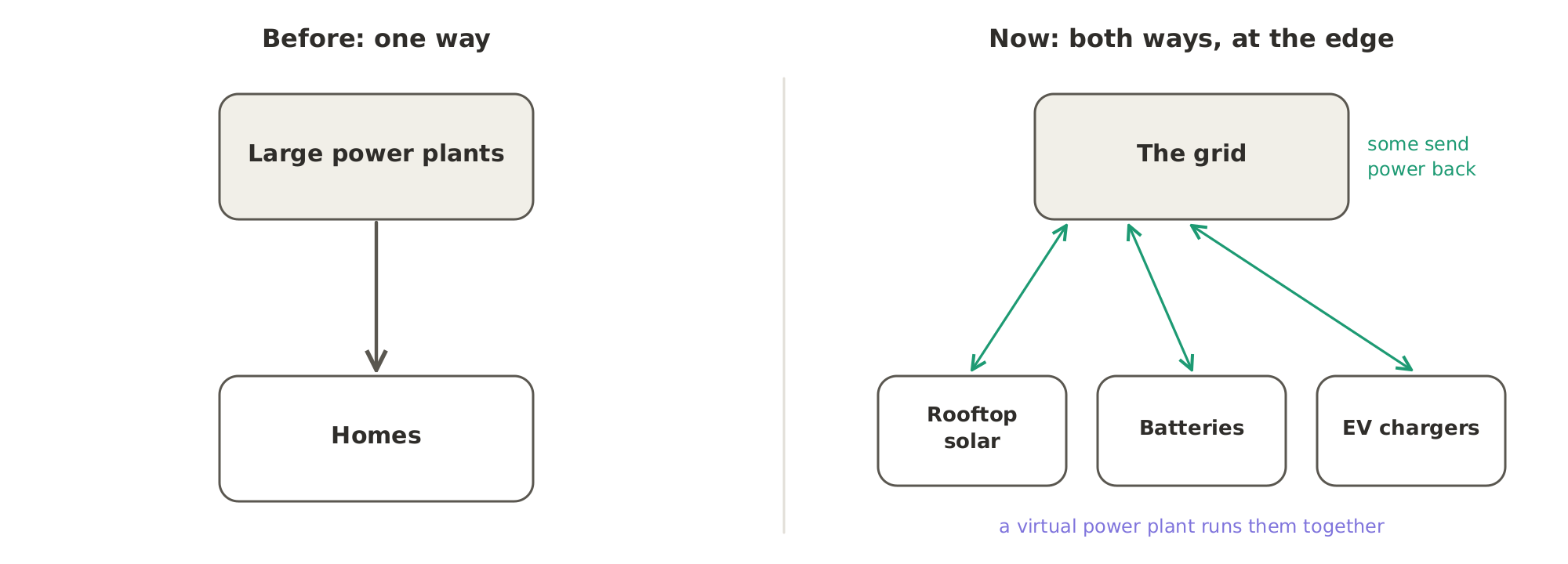
The grid's edge. Power used to flow one way, from large plants to homes. Now millions of small devices sit at the edge of the grid: rooftop solar panels, batteries and electric-vehicle chargers. Some of them send power back. The grid must now coordinate all of them.
Every company named here has posted software engineering jobs in India. Famous companies that don't actively hire software engineers in India are left out.
Keep reading, free
One more section is on this page: Grid equipment, smart meters and software for utilities. Sign in to read it here, in full.
Continue with Google- Grid equipment, smart meters and software for utilities
Grid equipment and control
Smart meters
Software for utilities
Managing the grid's edge. Two ideas matter here. Demand response means asking customers to use less power for a short time when the grid is under strain, usually for a payment. A virtual power plant is software that controls thousands of home batteries, water heaters and chargers together. To the grid, they act like one power plant.
A grid was once balanced by starting and stopping power stations. It can now be balanced by adjusting a million water heaters, batteries and chargers a little. That is a virtual power plant, run by software. The smart meters India is installing are the first step. The next step is AI models that forecast what the grid's edge will do, and dispatch it.
Who these companies hire, and for what, is on What energy and climate tech companies hire for.