ingrid.fyi India's software hiring trends, explained.
Sign in to ingrid.fyi with Google
Your Google account
name@gmail.com
Continue with Google
Home / Product companies / VI · Healthtech and life sciences / Hospitals, diagnostics and medical devices / Diagnostics and lab testing
On this page
Diagnostics and lab testing The lab and the test, from the sample and the analyser to the genes of a tumour Back to the blood test the skin doctor ordered for the patient in Texas, in Market Segment 22.1, Electronic health record (EHR) software. A nurse draws a tube of blood. The tube travels to a laboratory, where a machine called an analyser measures what is in it. The laboratory's software tracks the tube from arrival to result, and sends the result back to the doctor's record.

Most medical decisions depend on a test like this:

  • a blood count
  • a culture, which grows germs from a sample to identify an infection
  • a molecular test, which finds an infection from its genetic material
  • a genomic profile of a tumour, which reads the genes of a cancer

The test is run by a laboratory, on an analyser, and managed by a laboratory information system. More and more often, the sample is collected at home. This Market Segment is about the companies that make the analysers and the software, and those that run the tests. The buyers are hospitals, laboratories, doctors and patients. The same instruments also serve research. (More on them in Market Segment 25.2, Life science instruments and lab software, in Industry Vertical 25, Pharma and life sciences.)

Every company named here has posted software engineering jobs in India. Famous companies that don't actively hire software engineers in India are left out.
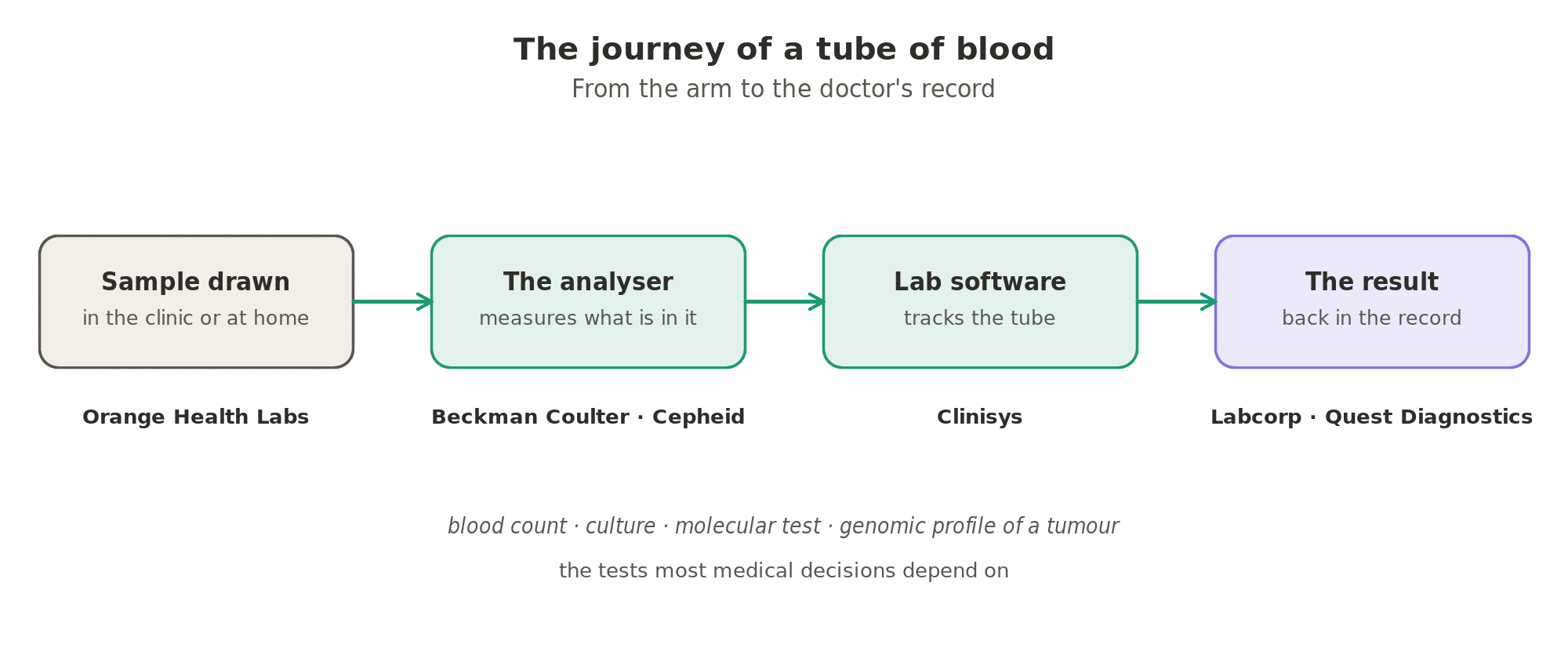
The journey of a tube of blood: the sample is drawn in the clinic or at home (Orange Health Labs), an analyser measures what is in it (Beckman Coulter, Cepheid), the laboratory information system tracks it (Clinisys), and the result goes back into the doctor's record (Labcorp, Quest Diagnostics).The journey of a tube of blood: the sample is drawn in the clinic or at home (Orange Health Labs), an analyser measures what is in it (Beckman Coulter, Cepheid), the laboratory information system tracks it (Clinisys), and the result goes back into the doctor's record (Labcorp, Quest Diagnostics).

This Market Segment has two sub-segments:

The lab's instruments and software: the analysers, and the software that runs the laboratory. The test itself: the laboratories and the genomics companies.

Keep reading, free

Two more sections are on this page: The lab's instruments and software and The test itself. Sign in to read them here, in full.

Continue with Google
  • The lab's instruments and software
  • The test itself
The lab's instruments and software Clinical analysers, molecular and point-of-care testing systems, laboratory information systems

Back to the tube of blood from the start of this Market Segment, arriving at the laboratory. A large laboratory that tests samples sent from many clinics is called a reference laboratory.

Beckman Coulter Diagnosticswith engineers in Bengaluru, has the most job postings in this Market Segment. It makes the analysers of hospital and reference laboratories: for body chemistry, for detecting antibodies and hormones, and for counting blood cells. It also makes the automation that moves samples between them. Cepheidwith engineers in Bengaluru, makes GeneXpert, a molecular testing system. It tests for tuberculosis and other infections in under two hours. India's national tuberculosis programme uses it across the country. Radiometerwith engineers in Bengaluru, makes the blood-gas analysers of intensive care, which measure the oxygen and acidity of the blood. HemoCue ABmakes point-of-care analysers for haemoglobin and white blood cells. Point-of-care means the test is done right next to the patient, not sent to a laboratory.

Beckman Coulter, Cepheid, Radiometer and HemoCue all belong to the Danaher group. Danaher itself is not covered in this Market Segment.

Then there is the software that tracks the tube:

Clinisyswith engineers in Bengaluru and Kolkata, sells a laboratory information system used in thousands of hospital, public-health and reference laboratories. It tracks every sample and every result.
The test itself Reference laboratories, cancer genomics and liquid biopsy, home sample collection

Back to the patient's blood test from the start of this Market Segment. It was run by one of America's large laboratory companies.

Labcorpwith engineers in Bengaluru and Mumbai, and Quest Diagnostics, with engineers in Hyderabad, are America's two largest laboratory companies. They run hundreds of millions of tests a year. (Quest's Quanum software, through which doctors order its tests, also appears in Market Segment 22.1, Electronic health record (EHR) software.)

Some tests read genes. A liquid biopsy finds a cancer from a blood sample. It reads the tumour's genes without cutting out a piece of the tumour.

Guardant Healthwith engineers in Hyderabad, and Guardant Health India, its Indian company, find cancer from a blood sample. Their liquid biopsy profiles a tumour's genes, and screens for colorectal cancer, the cancer of the large intestine. 4baseCarewith engineers in Bengaluru, sells genomic profiling of cancers, built for Indian patients. (More on genomics in drug research in Market Segment 25.1, AI drug discovery platforms, in Industry Vertical 25, Pharma and life sciences.)

Some tests come to the patient's door:

Orange Health Labswith engineers in Bengaluru, collects blood at home within an hour of booking, and reports the result the same day. (It also appears in Market Segment 22.4, Telemedicine and online consultation platforms.) The cancer found in a blood test.

Genomic tests once needed a sample cut from the tumour. Now they read fragments of tumour DNA in the blood. They use them to choose a treatment, detect a cancer that has come back, or screen people who have no symptoms. The frontier is screening for many cancers at once. The open question is whether it saves lives, at a cost health systems will pay.
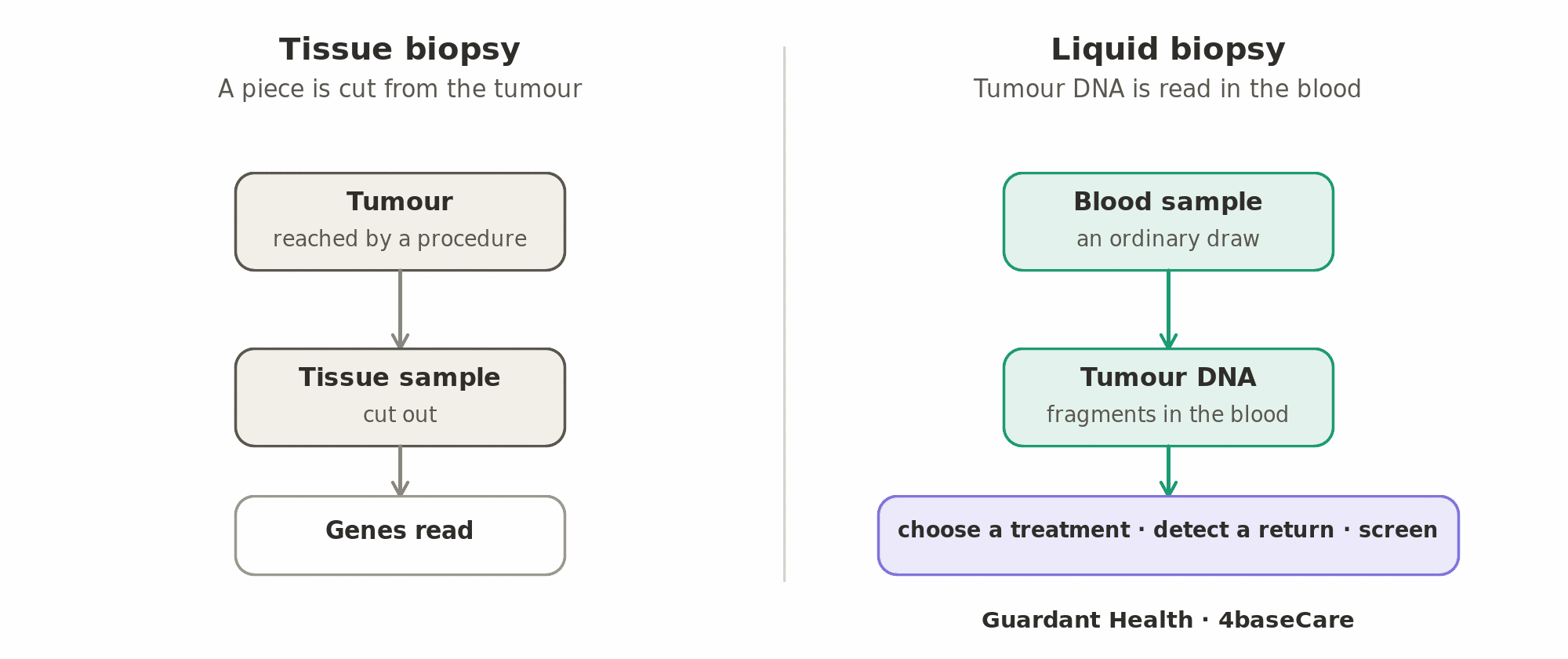
A tissue biopsy reads a cancer's genes from a piece cut out of the tumour; a liquid biopsy reads fragments of tumour DNA in an ordinary blood sample, to choose a treatment, detect a cancer that has come back, or screen people with no symptoms (Guardant Health, 4baseCare).A tissue biopsy reads a cancer's genes from a piece cut out of the tumour; a liquid biopsy reads fragments of tumour DNA in an ordinary blood sample, to choose a treatment, detect a cancer that has come back, or screen people with no symptoms (Guardant Health, 4baseCare). So the tube of blood from the start of this Market Segment passed through three kinds of company. An analyser measured it, a laboratory information system tracked it, and a laboratory company ran the test and sent back the result.
Who they hire

Who these companies hire, and for what, is on What hospital, diagnostics and medical device companies hire for.

Privacy Terms Refunds and cancellation Shipping and delivery © 2026 ingrid.fyi · Payments by Razorpay
You're browsing as a guest. Sign in free to follow links for five minutes, once an hour.