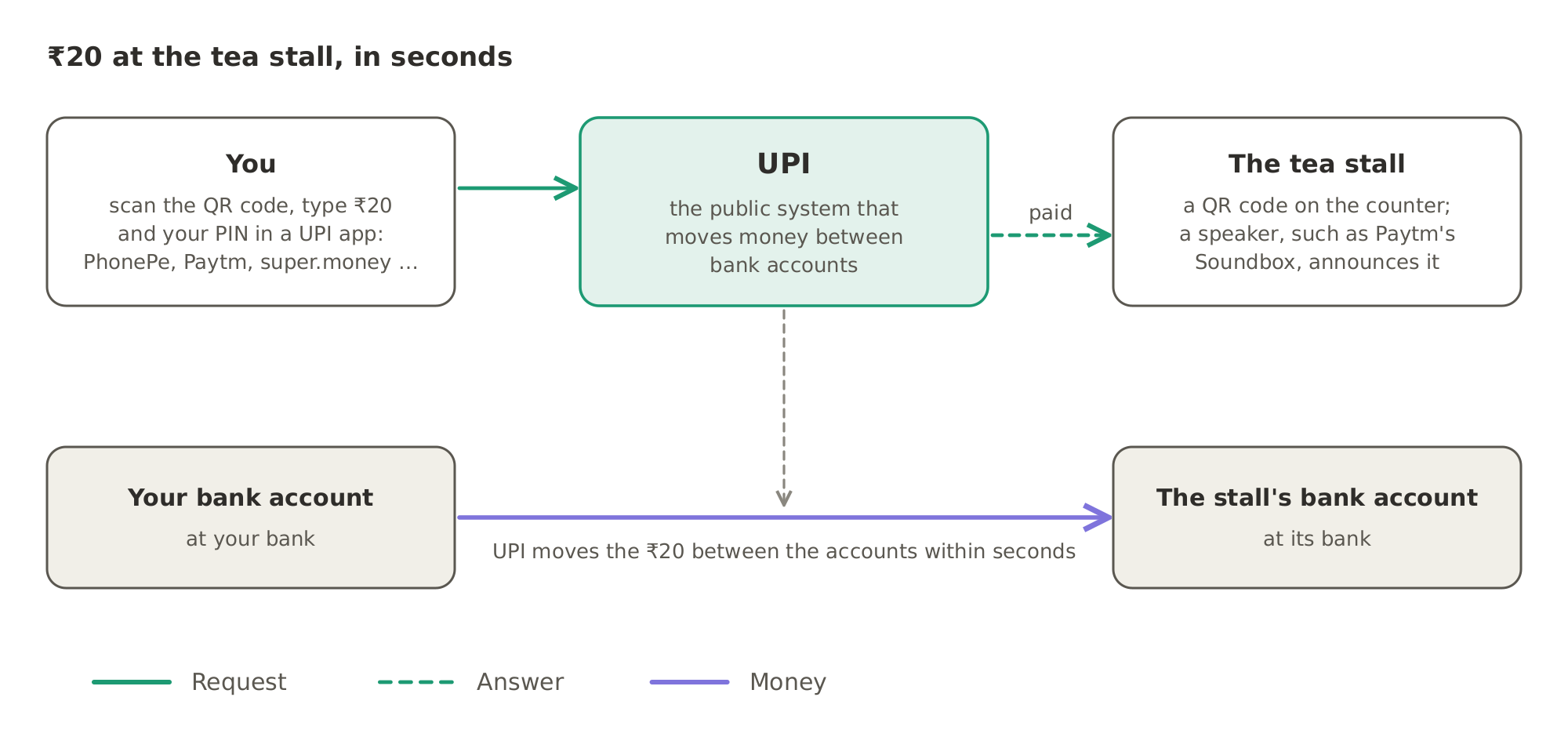
In India, the phone has become the place people pay from. The system behind it is UPI, the Unified Payments Interface. It is a public system that moves money from one bank account to another in real time, meaning within seconds. People use UPI through apps, not through their banks. A handful of those apps now carry most of the country's payments, from the tea stall's QR code to the rent.
This Market Segment covers the companies whose product is the phone that pays.
Every company named here has posted software engineering jobs in India. Famous companies that don't actively hire software engineers in India are left out.
This Market Segment has two sub-segments:
Keep reading, free
Two more sections are on this page: UPI and the wallet and The account on the phone. Sign in to read them here, in full.
Continue with Google- UPI and the wallet
- The account on the phone
Take the ₹20 at the tea stall from the start of this Market Segment. You paid it through a UPI app. These are the companies behind such apps.
Two companies covered mainly in other Market Segments sell payments from their own apps:
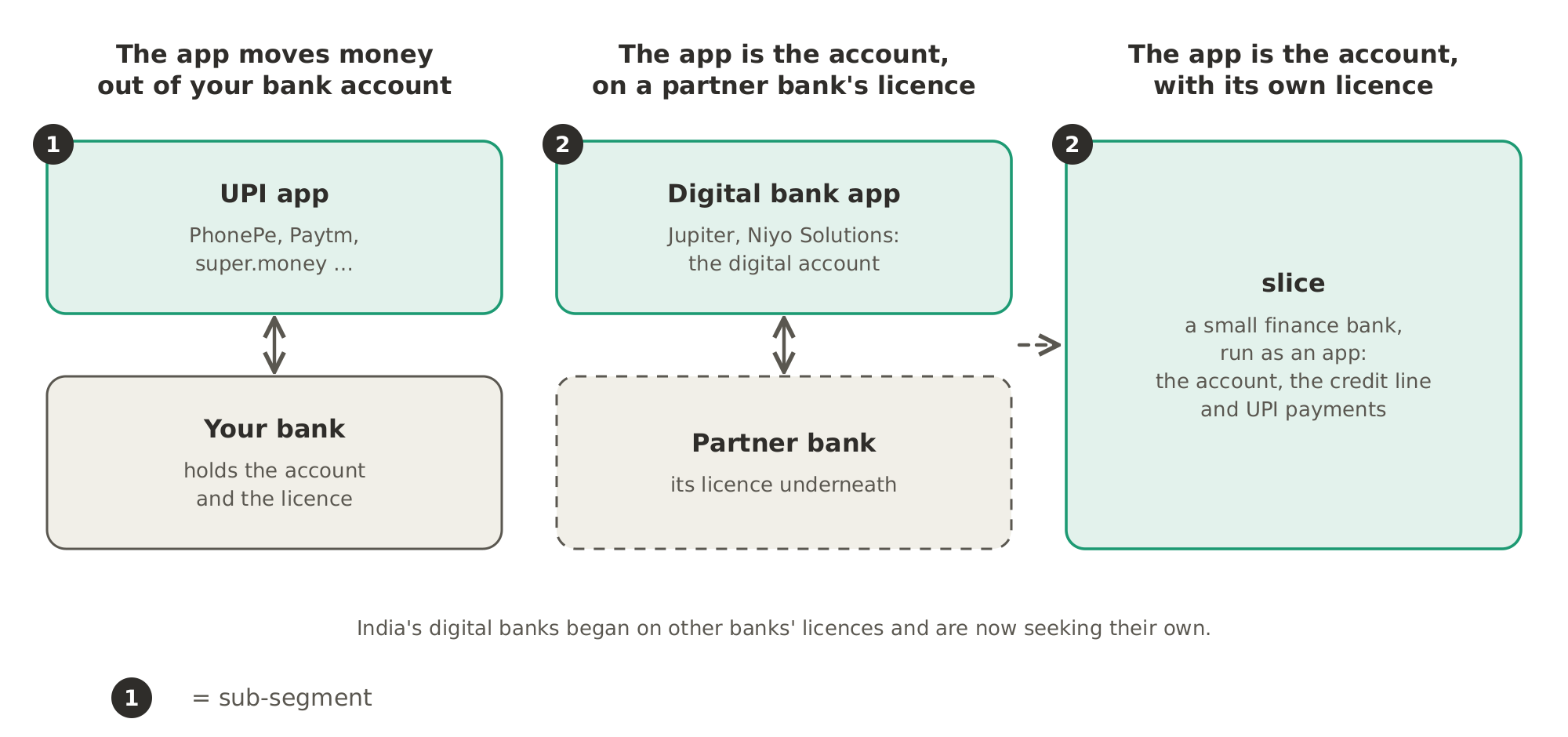
In the first sub-segment, the app moved money out of an account you hold at a bank. In this sub-segment, the app is the bank account itself. A bank that exists only as an app is called a digital bank, or neobank. Running a bank needs a licence from the regulator. So most of these companies work on top of a partner bank's licence.
Three companies sell the same idea in other countries, and build in Bengaluru:
One company here is covered mainly in another Market Segment:
India's digital banks began on other banks' licences. They are now seeking their own, as
Who these companies hire, and for what, is on What payments hires for.