India sees a lot of both. It receives more money from its people abroad than any other country. It also exports a great deal of services: software, design and freelance work, all paid for from overseas.
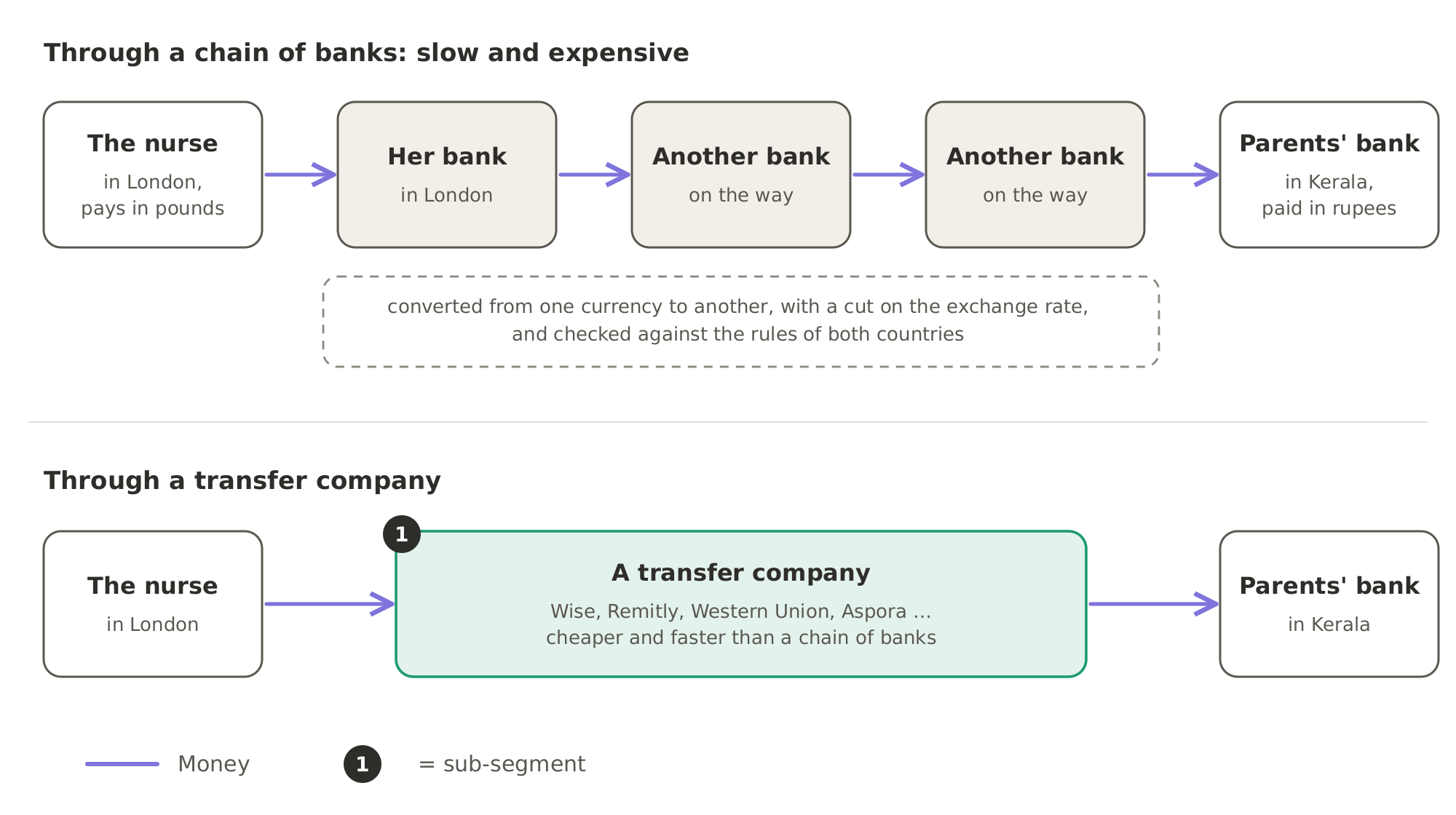
A payment that crosses a border is slow and expensive, for three reasons:
- It passes through several banks on the way.
- It is converted from one currency to another, and someone takes a cut on the exchange rate.
- It has to follow the rules of both countries.
This Market Segment covers the companies that make such payments cheaper and faster.
Every company named here has posted software engineering jobs in India. Famous companies that don't actively hire software engineers in India are left out.
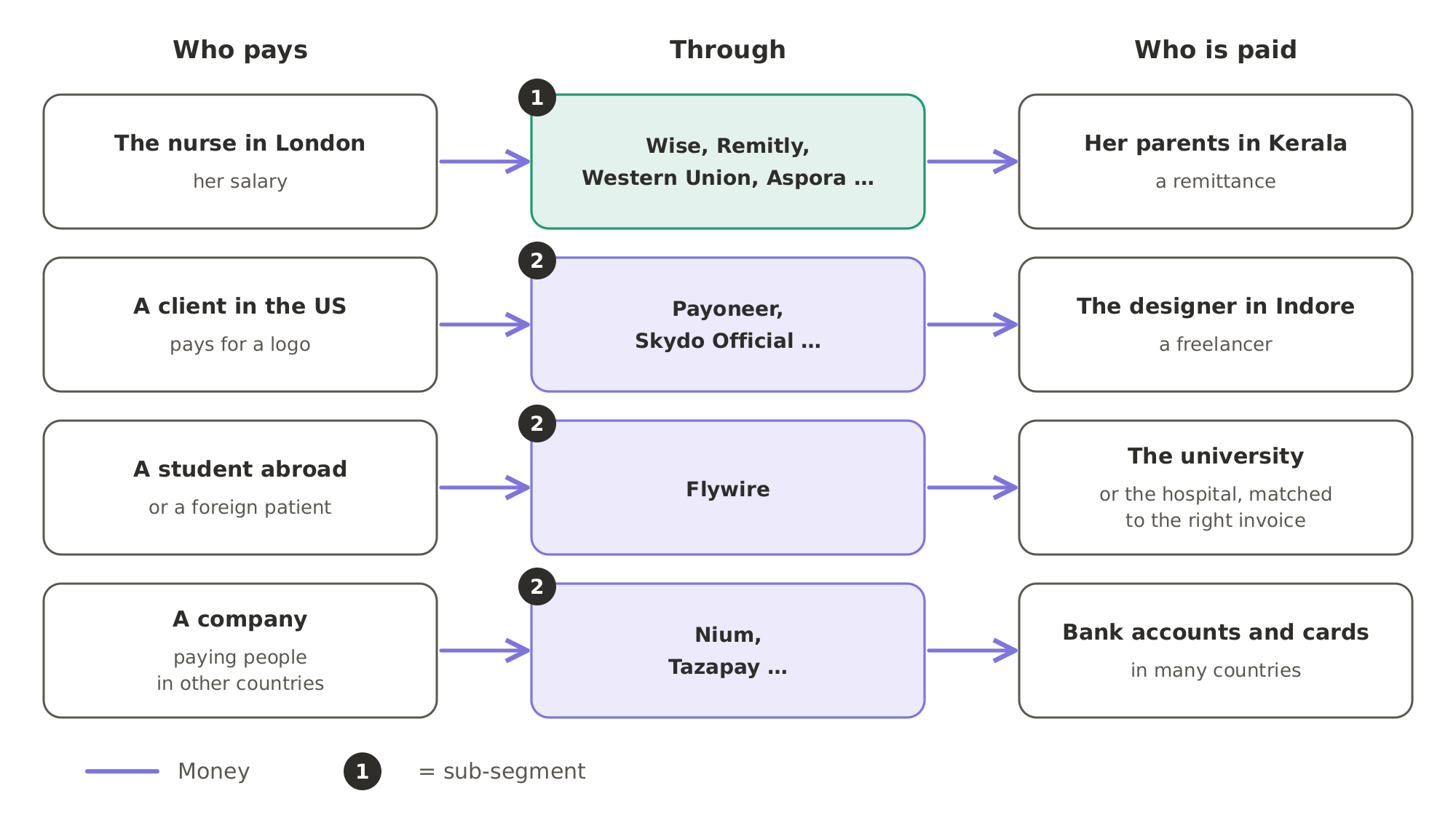
This Market Segment has two sub-segments:
Keep reading, free
Two more sections are on this page: Sending money home and Business across borders. Sign in to read them here, in full.
Continue with Google- Sending money home
- Business across borders
Take the nurse in London from the start of this Market Segment. The money she sends to her parents is called a remittance. She has a choice of companies to send it through.
Now take the designer in Indore, waiting to be paid by her client in the United States. Businesses, exporters and students have the same problem as the nurse, often with larger amounts.
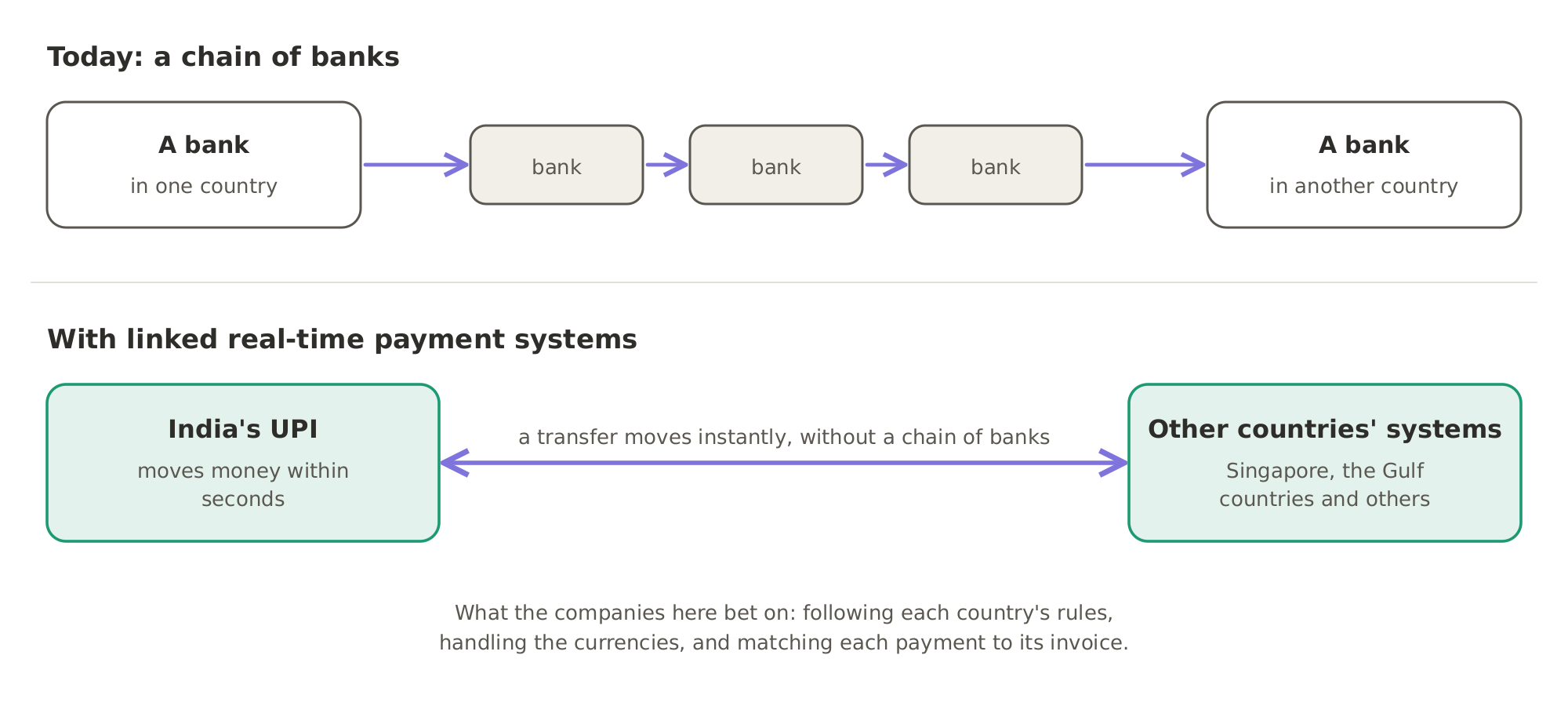
Countries are linking their real-time payment systems to each other. India's UPI (Unified Payments Interface) is being linked to Singapore's system, to those of the Gulf countries, and to others. With such a link, a transfer moves instantly from one country's system to another's, without a chain of banks. If these links spread, much of what the companies here sell becomes a feature of the national payment systems. So these companies are betting on the harder parts: following each country's rules, handling the currencies, and matching each payment to its invoice.
Who these companies hire, and for what, is on What payments hires for.