ingrid.fyi India's software hiring trends, explained.
Sign in to ingrid.fyi with Google
Your Google account
name@gmail.com
Continue with Google
Home / Product companies / VIII · Gaming, streaming and media / Adtech / Ad verification and marketing measurement
On this page
Ad verification and marketing measurement Did it work, checking that real people saw the ad and that it brought the sale A shoe brand spends a crore of rupees on online ads in a month. Sales go up. But was it the ads? Did real people even see them, or did bots? Which ads brought the buyers: the video, the search ad or the Instagram post? And would those people have bought the shoes anyway? Every advertiser asks these questions after a campaign. A whole industry of software exists to answer them.

Three questions, three kinds of tool. (More on the ads being measured in Market Segment 34.1, Ad buying platforms (DSPs) and ad networks.)
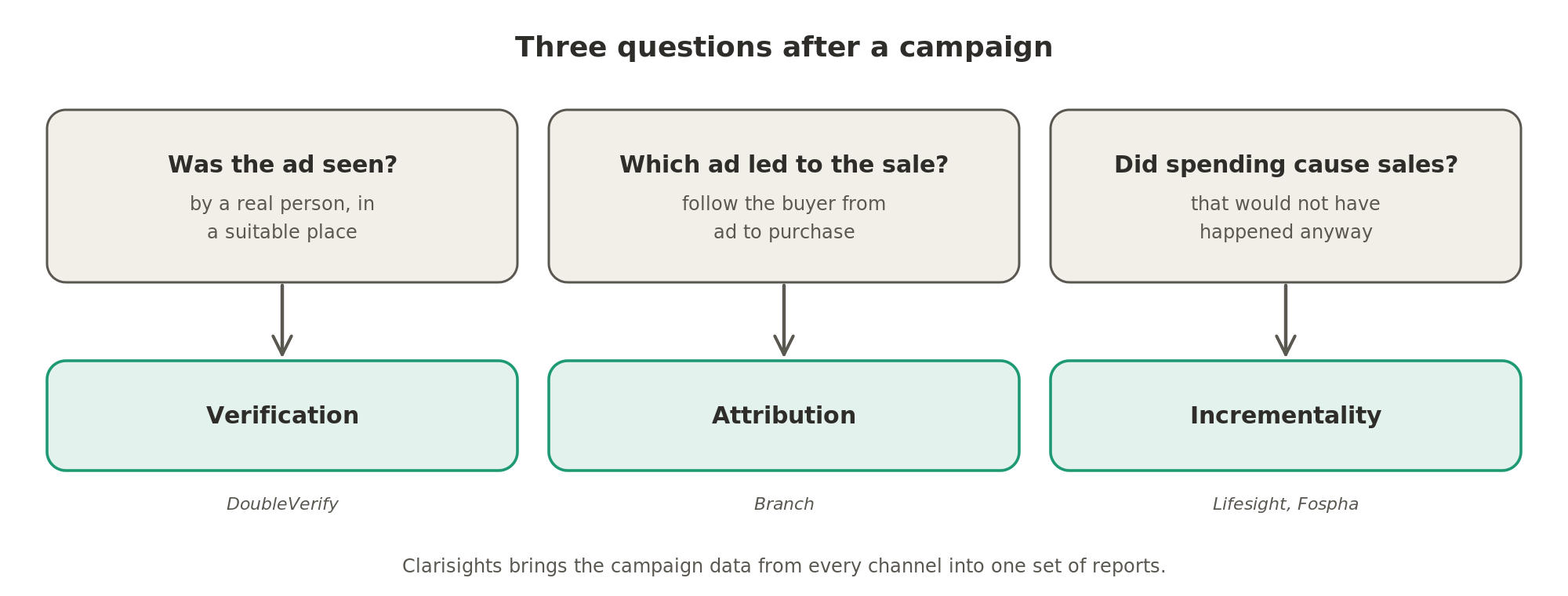
Was the ad seen, by a real person, in a suitable place? This is verification. Software checks that the ad appeared on the screen, that a person saw it rather than a bot, and that it did not run beside content that harms the brand. Which ad led to the sale? This is attribution. It follows a buyer's path from the ads they saw to what they bought, and gives each ad credit. Apps use deep links for this. A deep link opens a particular screen inside an app, such as a product, rather than the app's first screen. It also records which ad the user came from. Did the spending cause sales that would not have happened anyway? This is measurement of effect, or incrementality. One method is marketing-mix modelling. It uses statistics on sales and spending over months or years to estimate what each channel added. Another method is the experiment: show ads in some cities and not others, and compare sales. Three questions after a campaign, three kinds of tool: verification asks whether the ad was seen, attribution asks which ad led to the sale, and incrementality asks whether the spending caused sales that would not have happened anyway.Three questions after a campaign, three kinds of tool: verification asks whether the ad was seen, attribution asks which ad led to the sale, and incrementality asks whether the spending caused sales that would not have happened anyway.

Why the third question is back. Attribution works by following one person from ad to purchase. Privacy laws and phone makers now stop much of that tracking. Marketing-mix modelling does not follow anyone. It looks at totals, so it still works.
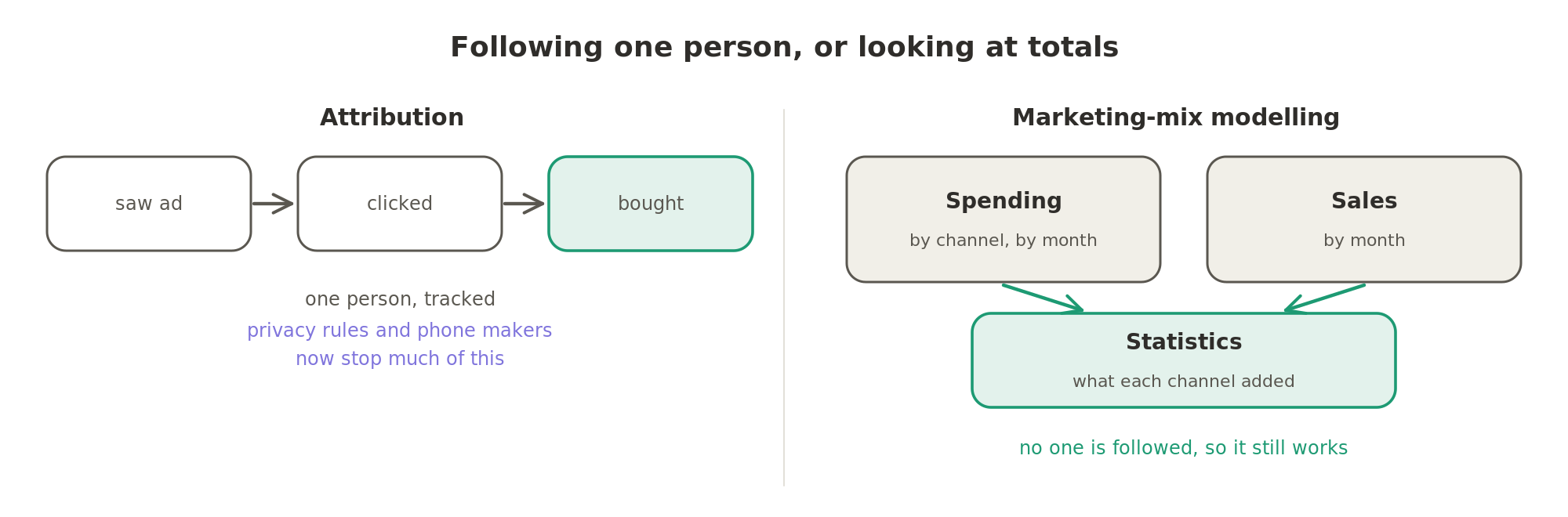
Attribution follows one person from ad to purchase, which privacy rules and phone makers now stop; marketing-mix modelling looks only at totals of spending and sales, so it still works.Attribution follows one person from ad to purchase, which privacy rules and phone makers now stop; marketing-mix modelling looks only at totals of spending and sales, so it still works.

Reports. A marketer runs campaigns on many channels, and each channel reports its results in its own way. Some tools bring all this data into one set of reports. (More on reports and dashboards in Market Segment 8.2, Business intelligence (BI) and analytics platforms, in Industry Vertical 8, Analytics and data providers.)

How the money flows. Advertisers pay these tools a subscription, or a fee for each thousand ads checked. The tools must be independent of the platforms that sell the ads, so that advertisers trust their numbers.

Every company named here has posted software engineering jobs in India. Famous companies that don't actively hire software engineers in India are left out.

Keep reading, free

One more section is on this page: Tools that check and measure ads. Sign in to read it here, in full.

Continue with Google
  • Tools that check and measure ads
Tools that check and measure ads

Reports and measurement of effect

Clarisightsfounded in Bengaluru, with engineers there, brings a marketer's campaign data from every channel into one set of reports. Lifesightmeasures what marketing caused, through marketing-mix models and experiments. Fosphawith engineers in Mumbai, does the same for brands that sell online.

Clarisights and Lifesight have the most job postings in this Market Segment.

Attribution in apps

Branchwith engineers in Bengaluru, runs the deep links that open the right screen in an app. It also measures which ads brought each app user.

Verification

DoubleVerifywith engineers in Bengaluru, checks for advertisers that their ads were seen by people rather than bots, on sites that suit the brand.

Other companies

Intentwisein Bengaluru, is another company in this area.

Integral Ad Science and AppsFlyer are not covered in this Market Segment. Nielsen, which measures how many people watch TV and streaming, is covered in another Market Segment. (More on it in Market Segment 8.3, Market research and market intelligence providers, in Industry Vertical 8, Analytics and data providers. More on consumer research in Market Segment 13.6, Survey and consumer research platforms, in Industry Vertical 13, Martech.)

Measuring without following.

Attribution was built on following one person from ad to purchase. Privacy rules and phone makers have ended much of that. AI models are bringing back the older, statistical method, which measures what spending caused across a whole market. They also make it fast enough to steer campaigns every week, rather than once a year.

That is the last step in the life of an ad: checking that it was seen, finding which ad led to the sale, and measuring what the spending really caused. Several of the companies that do this are small start-ups from Bengaluru.
Who they hire

Who these companies hire, and for what, is on What adtech companies hire for.

Privacy Terms Refunds and cancellation Shipping and delivery © 2026 ingrid.fyi · Payments by Razorpay
You're browsing as a guest. Sign in free to follow links for five minutes, once an hour.