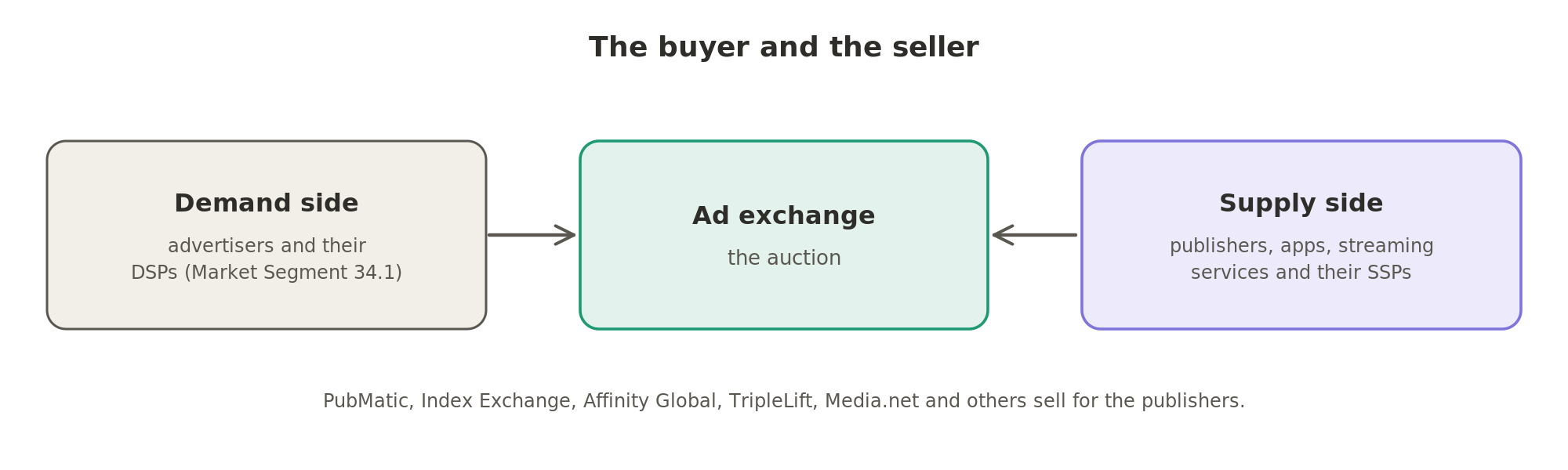
The seller's side of the auction. Every ad auction has a buyer and a seller.
Words to know
Choosing ads by the page, not the person. For years, ads followed each reader around the web. A cookie, a small file stored by the browser, told advertisers who the reader was and where they had been. Privacy laws and browser makers are now restricting this. So ads are once again chosen by what a page is about. An ad for cooking pans goes beside a recipe. This is called contextual advertising.
Ad formats
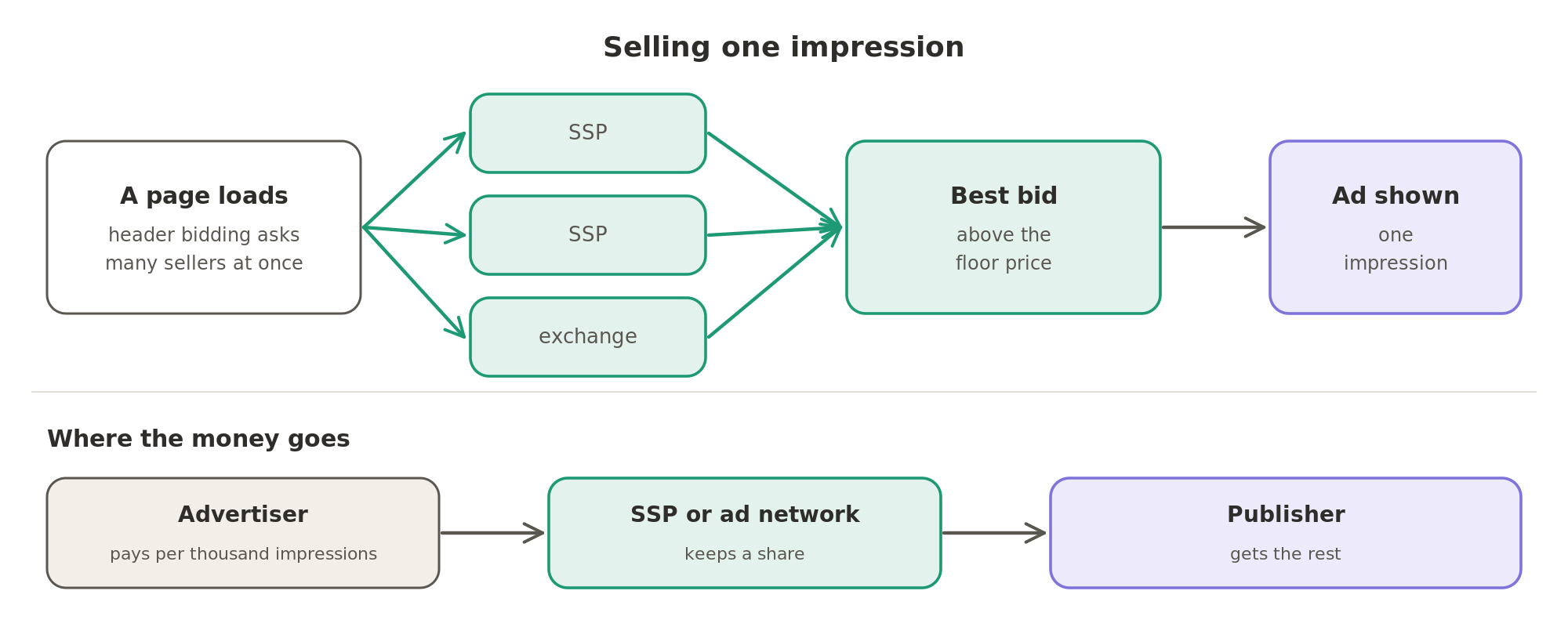
How the money flows. The advertiser pays for each thousand impressions. The SSP or ad network keeps a share of that money, and passes the rest to the publisher. Some large deals are still sold by people, not by auction. Media companies use order-management software to take and schedule these orders.
Fake traffic. Some websites use bots, programs that pretend to be people, to create fake impressions and collect ad money. Sellers and buyers both use software to catch them.
Every company named here has posted software engineering jobs in India. Famous companies that don't actively hire software engineers in India are left out.
Keep reading, free
One more section is on this page: Platforms that sell ad space for publishers. Sign in to read it here, in full.
Continue with Google- Platforms that sell ad space for publishers
Supply-side platforms and exchanges
Contextual advertising
Helping smaller publishers and app makers earn
Selling ads directly
Other companies
Google's AdSense and Ad Manager are covered elsewhere.
Publishers' ad businesses depend on readers visiting their pages. Now search engines answer with an AI summary, and send fewer readers on. At the same time, the tracking cookie is fading, and TV ads are being sold by auction. So the supply-side platforms are moving into streaming TV. Some also help publishers license their content to the companies that build AI models, as the ad market of the open web shrinks.
Who these companies hire, and for what, is on What adtech companies hire for.