Ratings, indices and research
Credit ratings, indices and benchmarks, ESG and governance research, proxy advice, risk analytics
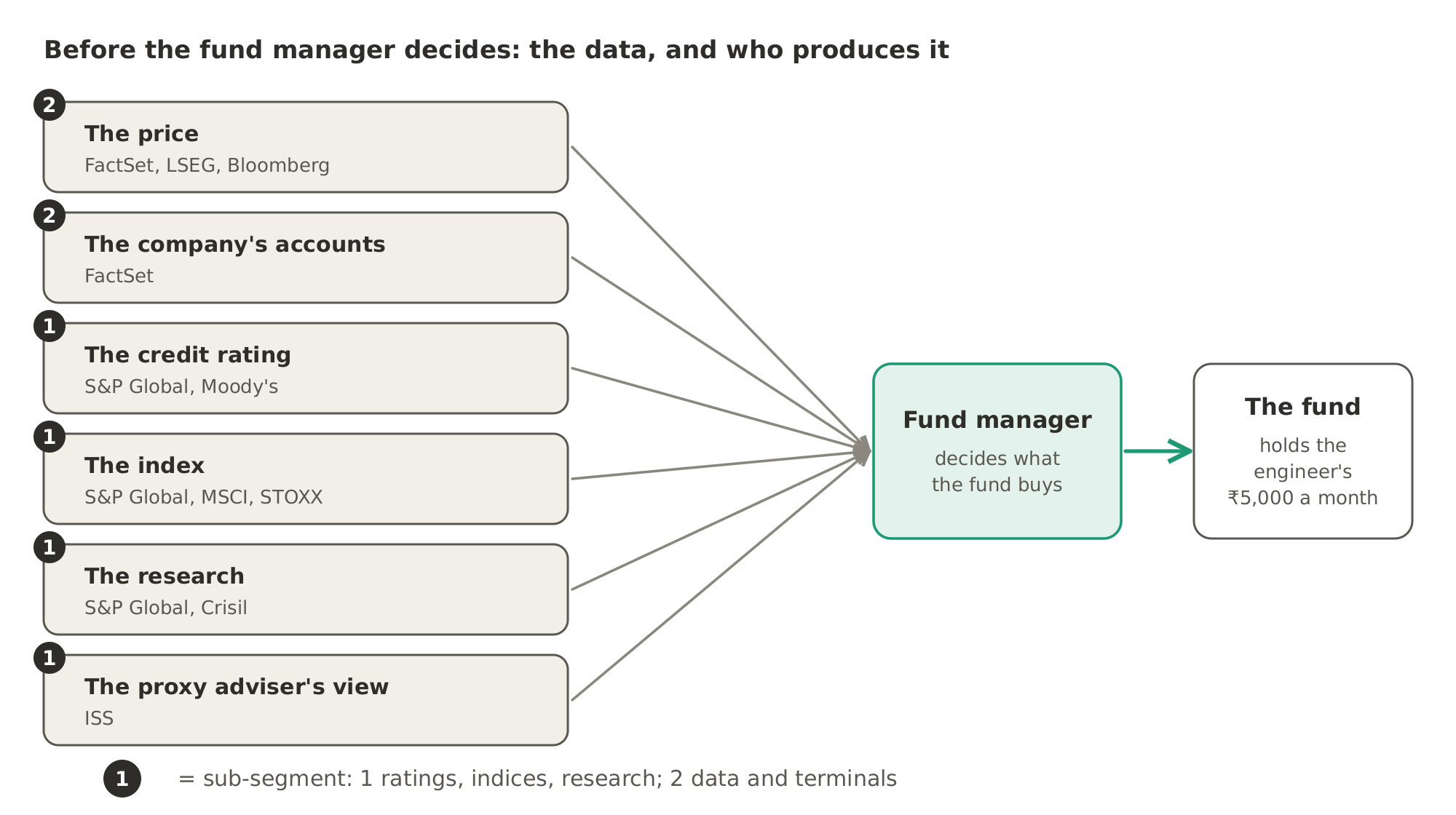
Back to the engineer's mutual fund. Say it is an index fund: it simply buys the shares in an index, in the same proportions. Then the company that runs the index decides, in effect, what her fund owns. And if the fund holds bonds, a rating agency's grade tells it how risky each one is.
S&P Globalwith engineers in Delhi NCR, Hyderabad and Bengaluru, has the most job postings in this Market Segment, and in Industry Vertical 20. It rates the debt of companies and governments. It runs the S&P 500, America's best-known index, and the other S&P Dow Jones indices. It also sells market intelligence, meaning data and analysis on companies and industries, and commodity prices, such as the prices of oil and metals. Its Indian centres are among the largest it has.
Moody's Corp.with engineers in Bengaluru and Delhi NCR, is the other large rating agency. Two more companies of the Moody's group are listed here: Moody's Ratings, for the ratings, and Moody's Analytics, for the risk software.
MSCI Inc.with engineers in Mumbai, Pune and Bengaluru, runs the share indices that global funds track. It also sells risk models and ESG ratings. ESG stands for environmental, social and governance: how a company treats the environment, its people and its shareholders.
Institutional Shareholder Services (ISS)with engineers in Mumbai and Delhi NCR, is a proxy adviser. It advises large investors how to vote at shareholder meetings, and rates how well companies are governed. Three more companies of the same group are listed here:- ISS STOXX, the parent company
- STOXX, its index business
- ISS Market Intelligence, which tracks the sales of funds
One company here is covered mainly in another Market Segment:
Crisilis India's largest rating agency, and part of S&P Global. It is here for its research and analytics. (More on Crisil in Market Segment 18.3, Credit bureaus, scoring and underwriting, in Industry Vertical 18, Lending and credit.)
Data and terminals
Financial data platforms and terminals, fund research and ratings, data feeds, AI equity research
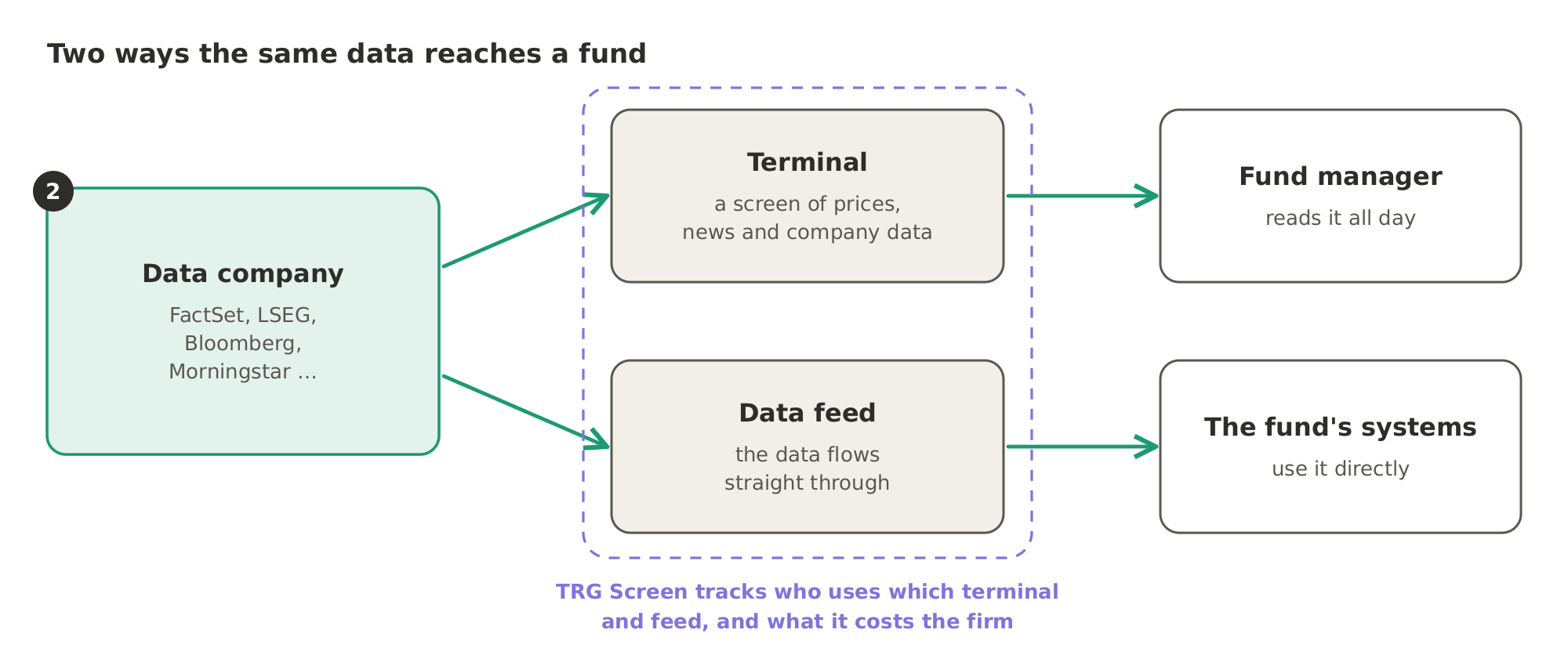
Back to the fund manager. All day, they work at a terminal: a screen, and the software behind it, that shows prices, news and company data in one place. The same data also flows straight into the fund's own systems, through data feeds.
FactSetwith engineers in Hyderabad, sells the workstation and the data feeds of analysts and portfolio managers. It brings together company accounts, analysts' estimates of future earnings, and data on who owns which shares. Its Hyderabad centre is one of its largest.
Morningstarwith engineers in Mumbai, rates and researches mutual funds. It sells data and software to financial advisers and fund managers. It also owns PitchBook, the database of private companies and deals.
LSEG (London Stock Exchange Group)with engineers in Bengaluru and Hyderabad, owns the former Refinitiv: its data, the Workspace terminal and the data feeds that rival Bloomberg's. LSEG also runs stock exchanges and clearing houses.
PineGap.aiwith engineers in Bengaluru, sells an AI platform for buy-side equity research. The buy side means the firms that invest money, such as funds. Equity research means studying companies to decide whether to buy their shares.
One company here sells data for a different purpose. It helps firms find rich clients, not investments.
Affluensea Bengaluru start-up, sells an AI platform that finds high-net-worth and ultra-high-net-worth individuals, meaning very rich and extremely rich people. It builds an up-to-date profile of each person. It also tracks the events that suddenly make someone richer, such as a company's listing on the stock market (an IPO) or its sale. Its customers are firms that want these people as clients: wealth managers, private banks, luxury brands and property developers. (More on wealth managers in Market Segment 20.5, Wealth management and advisory platforms.)
Two companies covered mainly in other Market Segments bring the terminal and what it costs:
Bloombergwith engineers in Pune, sells the Bloomberg Terminal and its data. (More on Bloomberg in Market Segment 33.1, News and professional information providers, in Industry Vertical 33, News, publishing and social media.)
TRG Screenwith engineers in Bengaluru, sells software that tracks what a firm spends on market data. Terminals and data feeds are expensive, so firms need to know who uses what. (More on TRG Screen in Market Segment 11.1, Procurement and source-to-pay software, in Industry Vertical 11, Finance and accounting software.)
 A data company such as FactSet, LSEG, Bloomberg or Morningstar sends the same data to a fund in two ways: through a terminal that the fund manager reads all day, and through a data feed that goes straight into the fund's own systems. TRG Screen tracks who uses which terminal and feed, and what they cost.
The analyst's first draft.
A data company such as FactSet, LSEG, Bloomberg or Morningstar sends the same data to a fund in two ways: through a terminal that the fund manager reads all day, and through a data feed that goes straight into the fund's own systems. TRG Screen tracks who uses which terminal and feed, and what they cost.
The analyst's first draft.
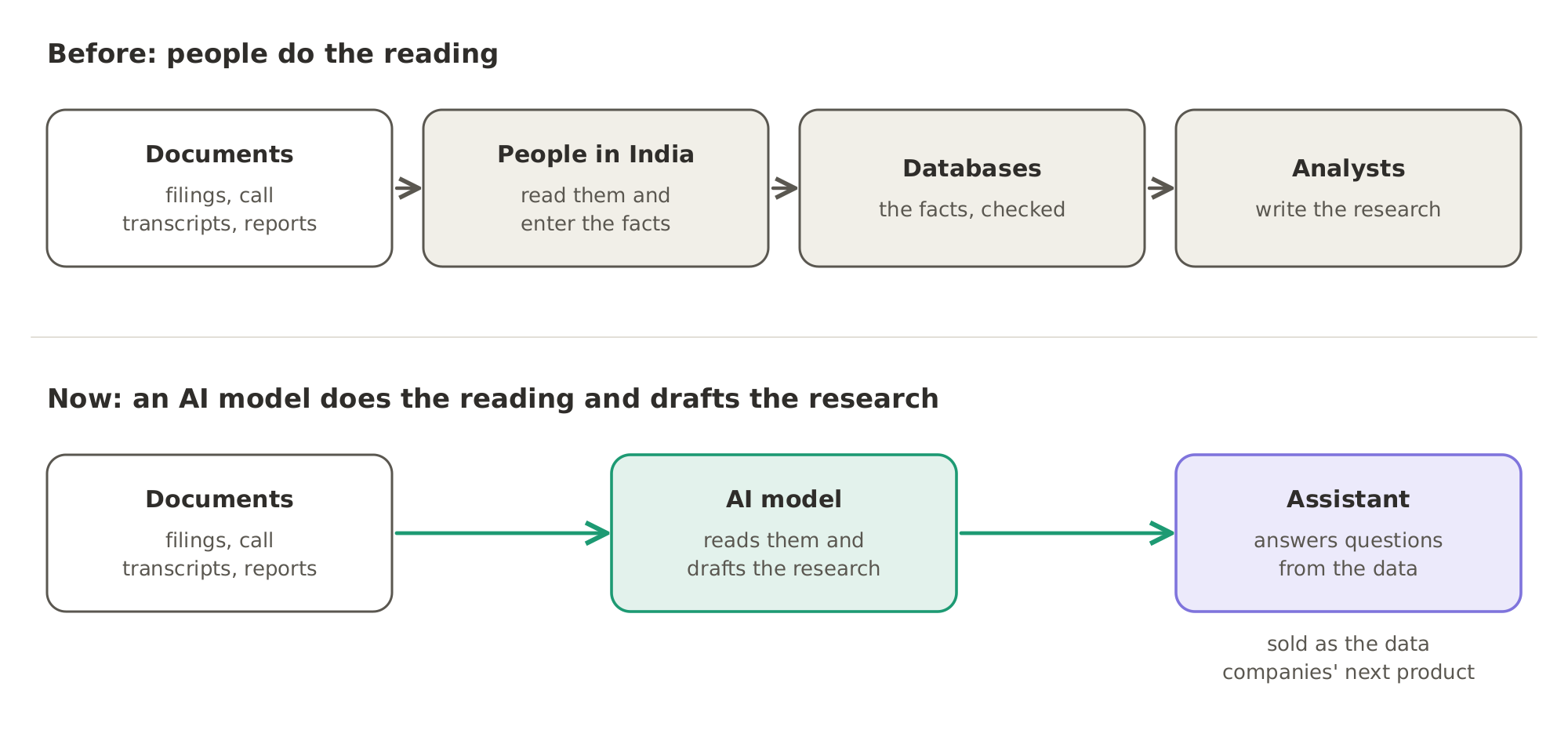
Much of this work in India is done by people. They read company filings, call transcripts and reports, and enter the facts into databases. Analysts then write research from them. AI models now do the reading, and draft the research. The data companies are selling the model itself as their next product: an assistant that answers questions from their data.
 Before, people in India read filings, call transcripts and reports, entered the facts into databases, and analysts wrote research from them. Now an AI model reads the documents and drafts the research, and the data companies sell an assistant that answers questions from their data as their next product.
That is the data the market runs on. The fund that holds the engineer's ₹5,000 follows an index, checks the ratings and reads the research. All of it comes from a handful of companies, many of which do much of the work in India.
Before, people in India read filings, call transcripts and reports, entered the facts into databases, and analysts wrote research from them. Now an AI model reads the documents and drafts the research, and the data companies sell an assistant that answers questions from their data as their next product.
That is the data the market runs on. The fund that holds the engineer's ₹5,000 follows an index, checks the ratings and reads the research. All of it comes from a handful of companies, many of which do much of the work in India.