Take the sports-shoe brand from Market Segment 13.4. It is launching a new running shoe. Before the brand can send a single message about it, the content has to be made:
- the photos and the launch video
- the banner, in forty different sizes for forty different websites and apps
- the launch event, and the webinar for those who cannot come
- the posts that creators publish about the shoe, paid for by the brand
- the augmented-reality (AR) effect that plays when a shopper points a phone at the shoebox
Every message in the other Market Segments of Industry Vertical 13, Martech, has to be made first. This Market Segment is the industry of making the content. It is also where the largest company in Industry Vertical 13 sits: Adobe. Most of the world's marketing content is made with Adobe's tools, and Adobe's two Indian centres are among the largest it has.
AI models have arrived here faster than anywhere else in marketing, because content is exactly what they generate. Several of the companies here were founded to make content with a model rather than a person.
Every company named here has posted software engineering jobs in India. Famous companies that don't actively hire software engineers in India are left out.
This Market Segment has three sub-segments, from the studio outward:
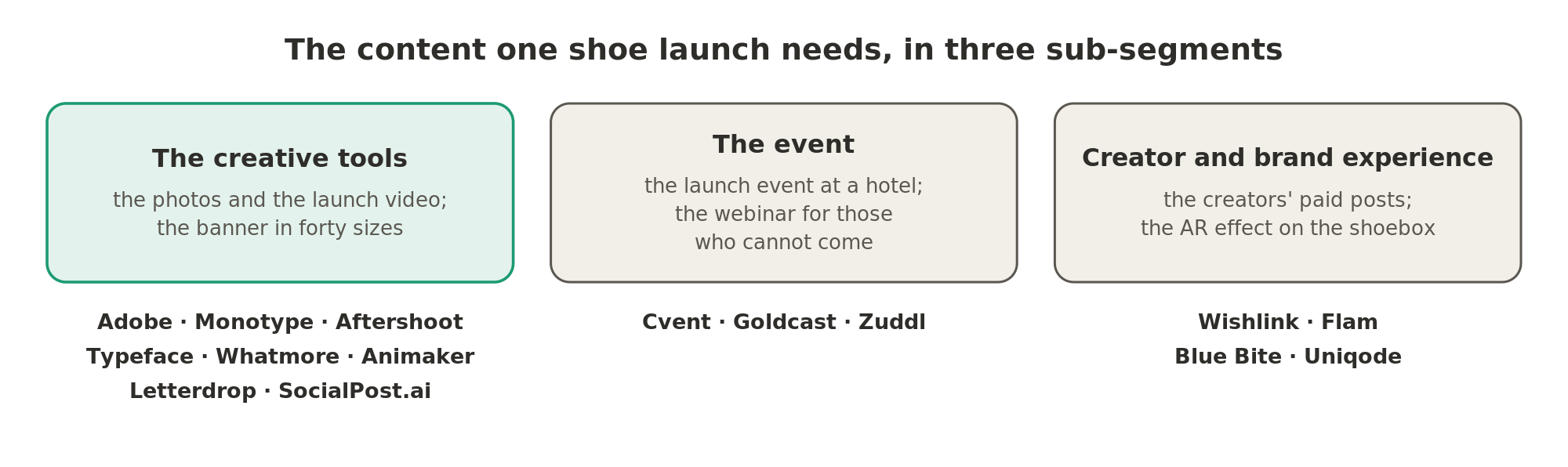 A shoe launch needs photos, video and banners from creative tools, a launch event and webinar from event software, and creators' posts and an AR effect on the shoebox.
The creative tools: from the professional's design software to the AI model that makes the variants
The event: conferences and webinars, run as software
The creator and the brand experience: the creator's shopping link, and the interactive moment on the pack
The creative tools
Creative and design software, generative content, video creation, fonts, photo editing
A shoe launch needs photos, video and banners from creative tools, a launch event and webinar from event software, and creators' posts and an AR effect on the shoebox.
The creative tools: from the professional's design software to the AI model that makes the variants
The event: conferences and webinars, run as software
The creator and the brand experience: the creator's shopping link, and the interactive moment on the pack
The creative tools
Creative and design software, generative content, video creation, fonts, photo editing
Back to the new running shoe from the start of this Market Segment. First, the brand's designers make the photos, the video and the banners. Most likely, they make them with Adobe's software.
Adobeis the largest company in Industry Vertical 13, and one of the largest in this collection. Its products include:- Photoshop, for editing photos
- Illustrator, for drawing graphics
- Premiere, for editing video
- Acrobat, for PDF documents
- the Experience Cloud, its marketing software
These are built in large part in Adobe's two Indian centres, in Bengaluru and Delhi NCR. They are among the largest engineering sites Adobe has anywhere. Adobe's Firefly AI models now generate the content that its tools used to edit. Adobe also appears in two other Market Segments. (More on its marketing software in Market Segment 13.1, Marketing automation and customer engagement platforms. More on Acrobat and Adobe Sign in Market Segment 10.4, Document processing, management and e-signature software, in Industry Vertical 10, ERP and business automation.)
Monotypeowns fonts: the libraries of typefaces that brands pay to use, and the custom lettering they order. It hires in Noida.
Aftershootwas founded in Delhi. It sells an AI model that sorts through a photographer's thousands of images, picks the best ones and edits them. The photographer first teaches the model their own style.
Five companies make content with an AI model from the start:
Typefacesells generative content for large companies. Its AI is trained on the brand's own style, and controlled so that what it produces stays on brand. Typeface hires in Bengaluru and Hyderabad.
Whatmorea small Bengaluru company, generates shoppable video for online stores: video from which a shopper can buy the product directly. (It also appears in Market Segment 27.1, E-commerce storefront, checkout and search tools, in Industry Vertical 27, Retail tech.)
Animakerwas founded in Chennai, and hires in Bengaluru. It makes animated videos. With it, someone who is not a designer can make an explainer video, a short video that explains a product.
Letterdropin Bengaluru, turns what a company's experts know into the posts and articles that its executives publish.
SocialPost.aia ten-person Bengaluru company, presents itself as an AI tool for social-media content.
The variant made by a model.
Marketing needs the same idea in hundreds of versions, for different sizes, languages and audiences. The shoe banner in forty sizes is one example. Making these versions used to be the largest cost in a creative team. Adobe's Firefly and Typeface now generate them on brand. The designer's job is becoming to set the direction and approve the result.
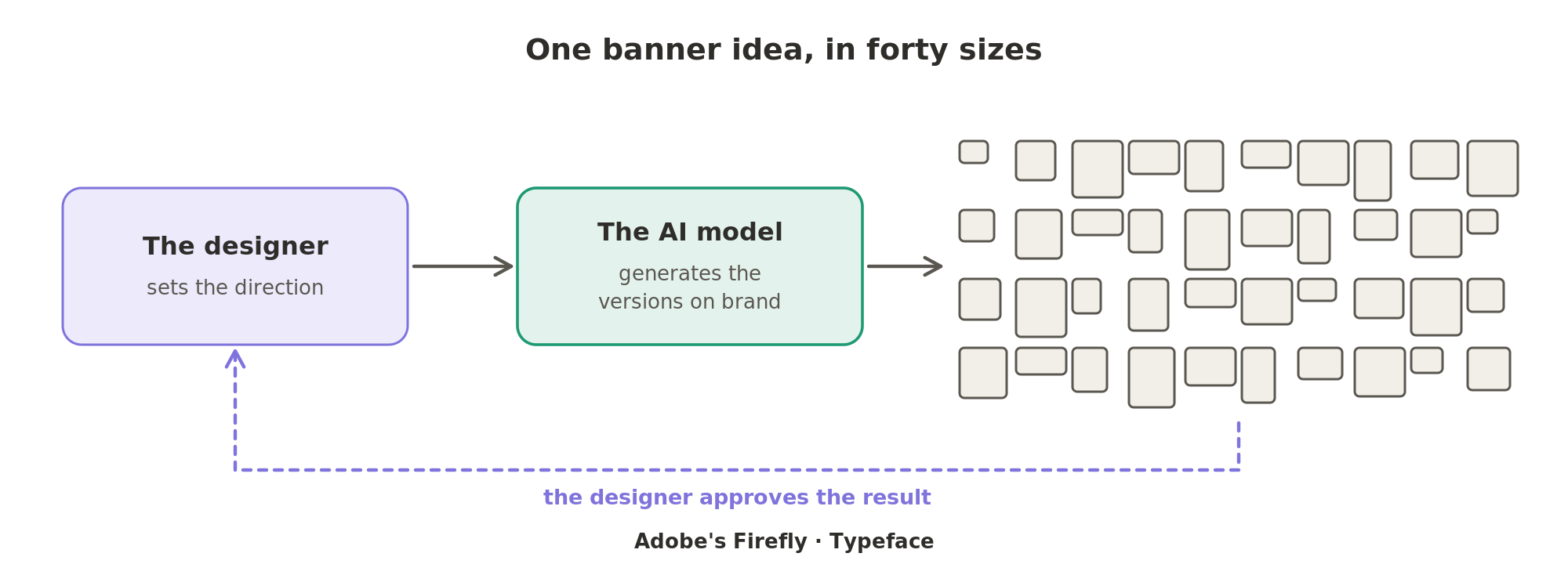 The designer sets the direction, an AI model generates the banner in forty sizes on brand, and the designer approves the result.
The event
Event management, virtual and hybrid events, webinars, business-to-business (B2B) video
The designer sets the direction, an AI model generates the banner in forty sizes on brand, and the designer approves the result.
The event
Event management, virtual and hybrid events, webinars, business-to-business (B2B) video
Back to the shoe launch. The brand invites its dealers and the press to a launch event at a hotel. For those who cannot come, it runs a webinar. An event that happens only online is called a virtual event. One that happens in a hall and online at the same time is a hybrid event. Both are now run on software.
Cventis the software of the corporate event. It handles:- the registration
- finding the venue, from a database of hotels and conference centres
- the app that attendees use at the event
- measuring who came, and what they did there
Cvent also sells the hotels' side of the same deal, as its hospitality cloud. It hires in Noida and Bengaluru, and its Indian centres are among its largest. (Because of its corporate-travel business, it also appears in Market Segment 29.3, Corporate travel management platforms, in Industry Vertical 29, Travel tech.)
Goldcastsells a video platform for business-to-business marketers: the webinar and the virtual event. Afterwards, an AI model cuts the recording into short clips and articles. Goldcast hires in Bengaluru.
Zuddlwas founded in Hyderabad, and hires there. It sells an event and webinar platform, with registration and analytics.
You're reading as a guest. Sign in free to follow links for five minutes, once an hour.
Sign in
The creator and the brand experience
Creator and influencer platforms, shoppable links, augmented-reality and connected-packaging experiences, QR codes
This last sub-segment covers two kinds of content. One is made by someone other than the brand. The other is met on a pack or a poster, before it reaches a screen.
Back to the new running shoe. The brand pays creators, people with a large following on Instagram or YouTube, to post about it. The industry also calls them influencers.
Wishlinkwas founded in Gurugram, and hires in Delhi NCR. It sells the shop window of the creator economy. An Indian creator shares a link to the products in a post. A follower buys through the link, and the creator earns a commission, a share of the sale. For the brands that pay, Wishlink manages the campaign. It also shows which creator's post led to which sale, which is called attribution.
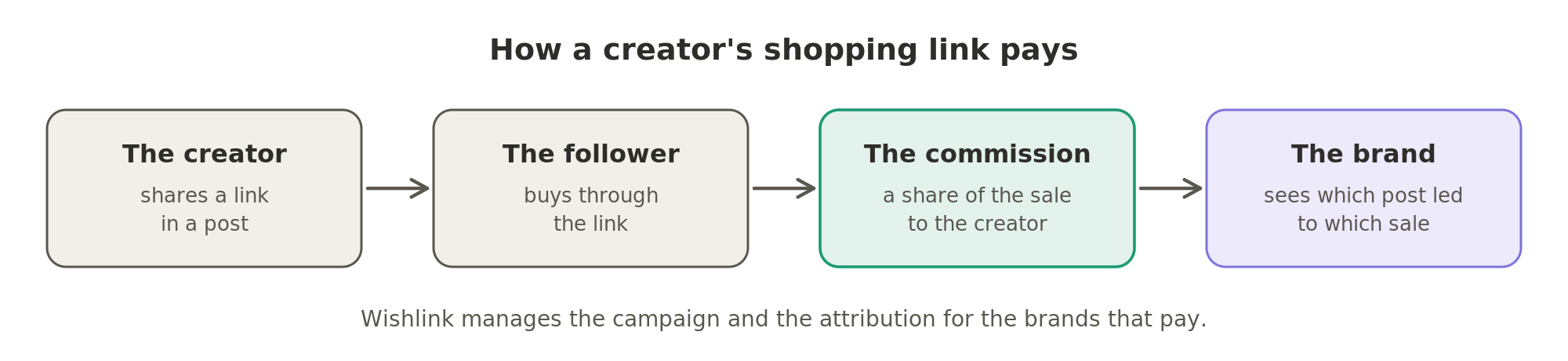 A creator shares a shopping link, a follower buys through it, the creator earns a commission, and the brand sees which creator's post led to which sale.
Now the shoe is in the shops. A shopper points a phone at the shoebox, and something happens on the screen.
Flamsells mixed-reality brand experiences. Augmented reality adds digital images to what the phone's camera sees. A shopper opens one of Flam's AR campaigns by pointing a phone at a pack or a poster. Flam hires in Bengaluru.
Blue Bitesells the platform behind the connected product: a tag or code on the packaging. Scanning it opens an experience on the shopper's phone. It also tells the brand who scanned it, and where. Blue Bite hires in Bengaluru.
Uniqodewas founded in Bengaluru, and hires there. It sells the QR code itself: the tool that makes QR codes, digital business cards, and the analytics of every scan.
That is how the new running shoe gets its content. Creative tools make the photos and the banners, more and more with AI models. Event software runs the launch. And specialist companies build the creators' shopping links and the moment on the shoebox.