How a fleet is watched. Each vehicle carries a telematics device: a small box with GPS, sensors and a SIM card. It reports the vehicle's location, speed, harsh braking, idling, fuel use and engine faults. Fleet-management software gathers these reports on one screen, plans routes and schedules maintenance.
Cameras that watch the road and the driver. More and more fleets add cameras, called dash cams. One faces the road, and one often faces the driver. AI on the camera spots risky moments, such as using a phone, following too closely or dozing off, and warns the driver at once. The video is kept for coaching drivers later, and as evidence after a crash. The industry calls this video safety, and it is the fastest-growing part of this market.
The rules for trucks in America. American law limits how many hours a truck driver may drive in a day. Drivers must record their hours in an electronic logbook, and fleet software provides it.
Paying for fuel. Fleets pay for fuel with fuel cards. A fuel card works like a payment card, but the company can limit what it buys and see every purchase.
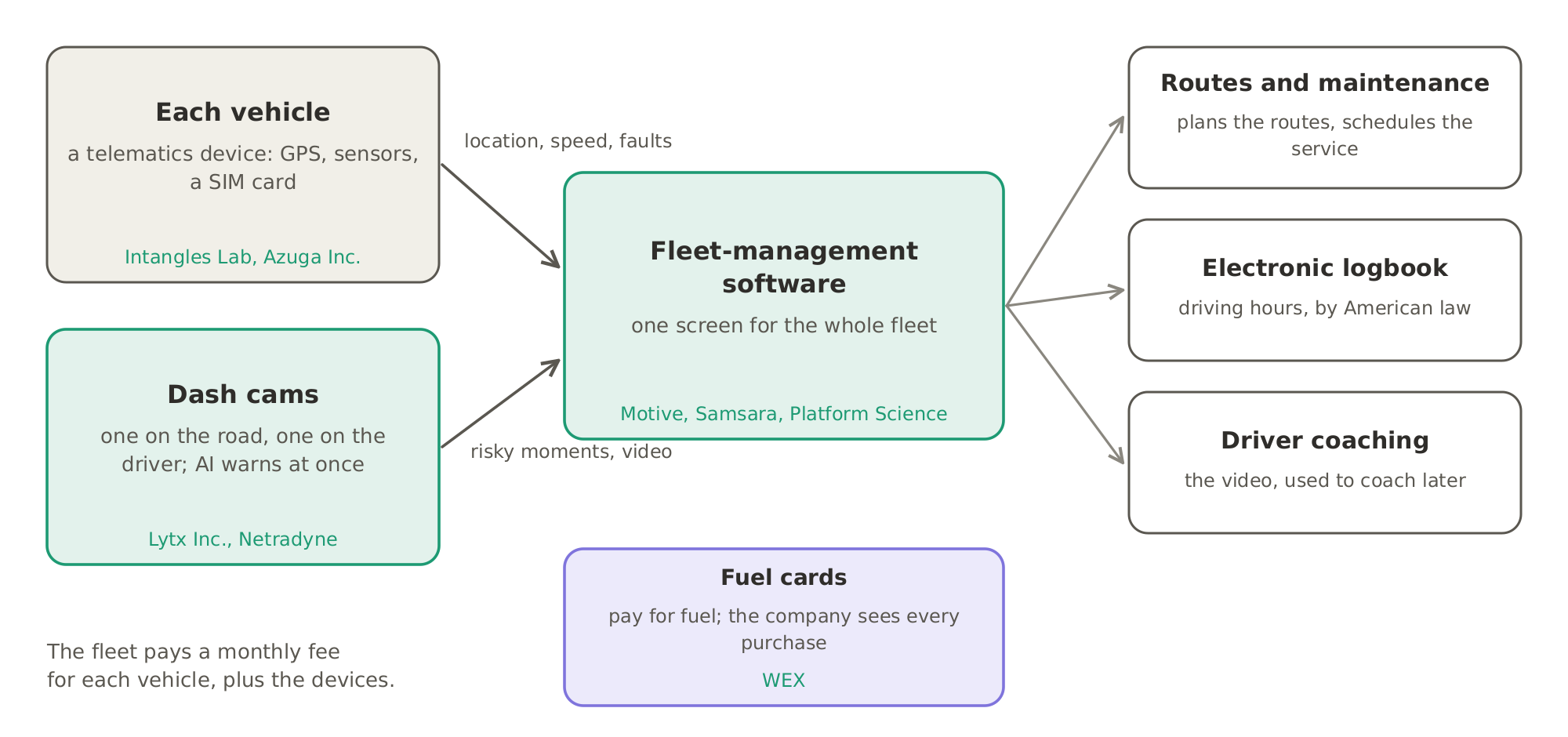
Who buys, and how they pay. The buyers are trucking and logistics companies, bus operators, delivery companies, and companies whose staff drive to customers. They usually pay a monthly fee for each vehicle, plus the cost of the devices. Fleets that improve their drivers' safety can also pay less for insurance.
The market is led by American companies, and several of them build their products in Bengaluru.
Every company named here has posted software engineering jobs in India. Famous companies that don't actively hire software engineers in India are left out.
Keep reading, free
One more section is on this page: Video safety, fleet tracking and fuel cards. Sign in to read it here, in full.
Continue with Google- Video safety, fleet tracking and fuel cards
Video safety
Fleet management
Two more companies work in this area:
Four companies covered mainly in other Market Segments bring payments and platforms:
Fleet cameras began as a way to collect evidence after a crash. The AI models on them now warn a driver in the moment, and coach them afterwards. Fleets report fewer accidents and lower insurance costs. But the same cameras raise questions about watching drivers all day. The companies are learning to show drivers that the camera protects them too.
Who these companies hire, and for what, is on What automotive and mobility companies hire for.