- the engineer in Bengaluru hired by a start-up in Austin that has no company registered in India
- the contractor in Manila
- the employee moving to another country, whose visa has to be filed before they can start
Say you are that engineer in Bengaluru. The start-up in Austin wants to hire you. But to employ you in India, it would normally need its own registered company in India, called a legal entity, with its own payroll, tax filings and compliance. Setting that up for one engineer would take months.
The industry that made this routine started only in the mid-2010s. Its main product is the employer of record, or EOR. An employer of record is a company that legally employs your worker in a country where you cannot. It runs the payroll, the benefits and the compliance there for you. It turned hiring someone abroad from a legal project into a monthly subscription. It grew fastest in the years when companies discovered they could hire anywhere.
Beside it sits an older business: immigration case management. This is the software through which a large employer files and tracks the work permits of thousands of staff.
The buyers are companies that hire across borders. This Market Segment has six small companies, and four of them are Indian-founded. That fits, because India is the country the world most often hires from across a border.
Every company named here has posted software engineering jobs in India. Famous companies that don't actively hire software engineers in India are left out.
Keep reading, free
One more section is on this page: What this section holds. Sign in to read it here, in full.
Continue with Google- What this section holds
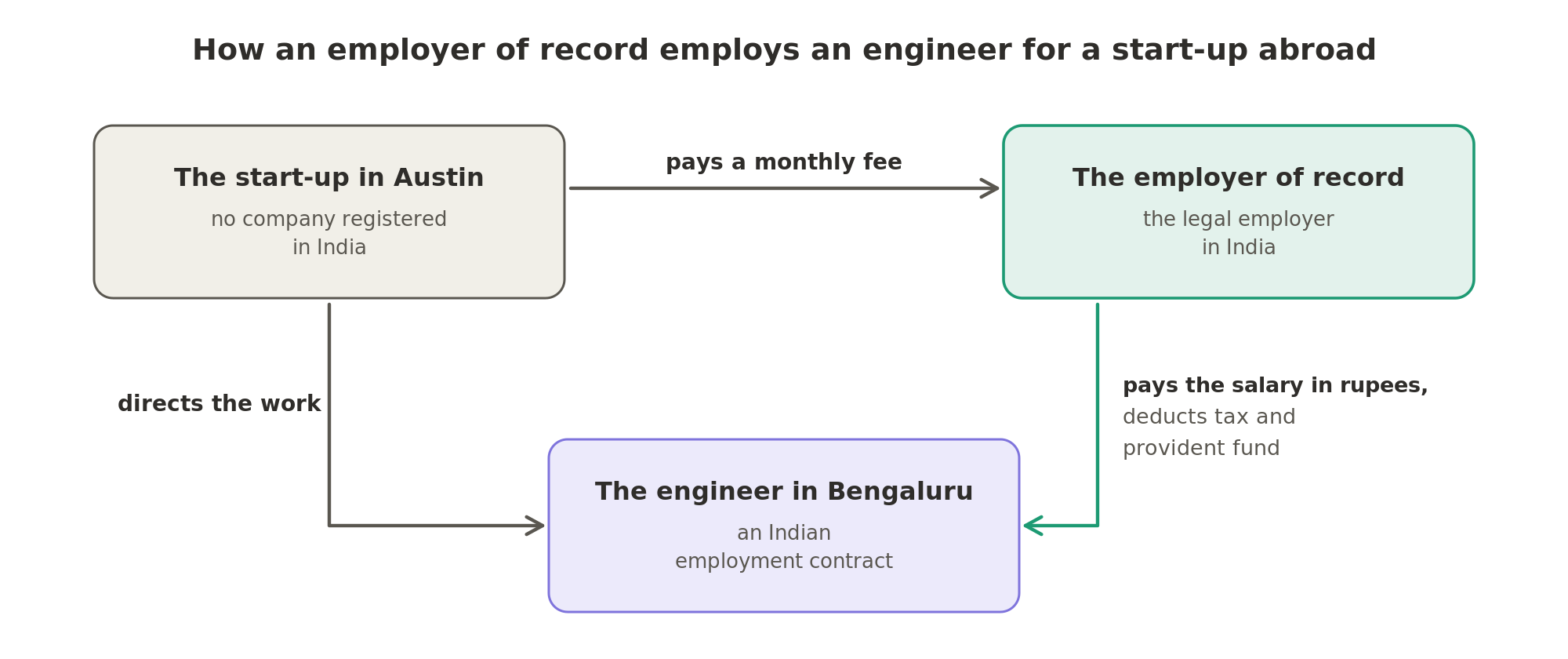
Back to you, the engineer in Bengaluru from the start of this Market Segment. The Austin start-up signs up with an employer of record. The EOR becomes your legal employer in India. It pays your salary in rupees, deducts your tax and provident fund, and gives you an Indian employment contract. The start-up directs your work and pays the EOR a monthly fee.
One company here works on a different problem instead: moving the person, not just the pay.
The employer of record began as a workaround for a legal entity a company did not have. The platforms are now becoming the place where a company spread across many countries runs all of its people, including their pay, benefits and laptops.
Who these companies hire, and for what, is on What HR tech companies hire for.