Take a five-person start-up in Pune building a food-ordering app. Its backend needs servers. But the team does not want to buy servers, or rent space in a data centre to keep them in. So it rents computing power instead:
This is what "the cloud" means. The provider owns the servers and keeps them running. The customer rents a share of them over the internet, and pays for what it uses.
Market Segment 3.1 was about the building. This Market Segment is about the other half: the software through which a provider rents out its machines. It also covers other things a company rents, such as its domain name and a place for its website.
The three biggest cloud providers are called hyperscalers. They are Amazon Web Services (AWS), Microsoft Azure and Google Cloud, and together they hold most of this market. They are covered elsewhere.
Every company named here has posted software engineering jobs in India. Famous companies that don't actively hire software engineers in India are left out.
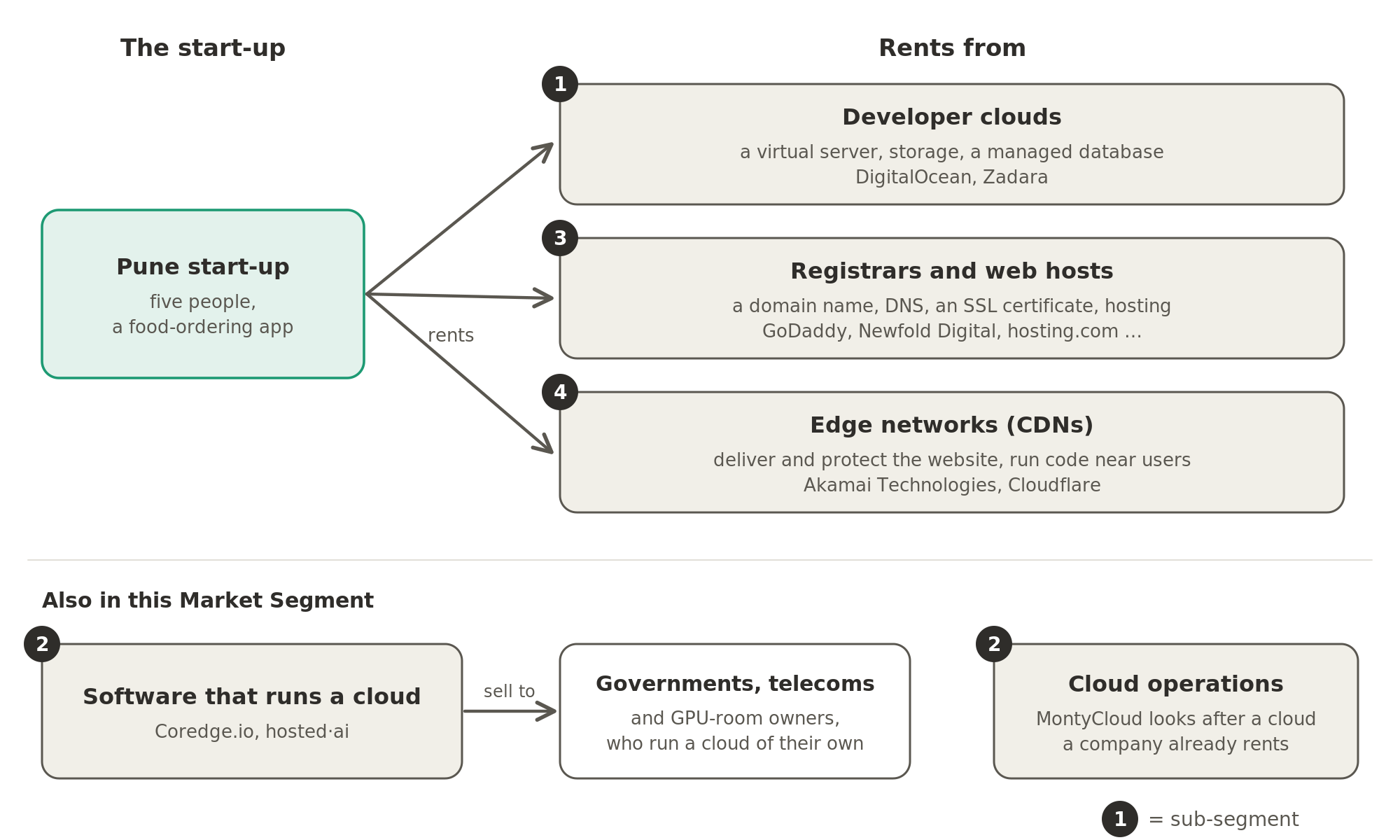
This Market Segment has four sub-segments:
Keep reading, free
Four more sections are on this page: The cloud for everyone else, The software that runs a cloud, Domains, DNS and web hosting, and The edge as a cloud. Sign in to read them here, in full.
Continue with Google- The cloud for everyone else
- The software that runs a cloud
- Domains, DNS and web hosting
- The edge as a cloud
Take the Pune start-up from the start of this Market Segment. It could rent from AWS. But the hyperscalers built for the largest customers first. Smaller customers became a market of their own. They are individual developers, start-ups, and mid-sized companies that want a server and a bill that is easy to understand.
One company here works the other way round. Instead of renting out machines in its own data centres, it puts them where the customer is.
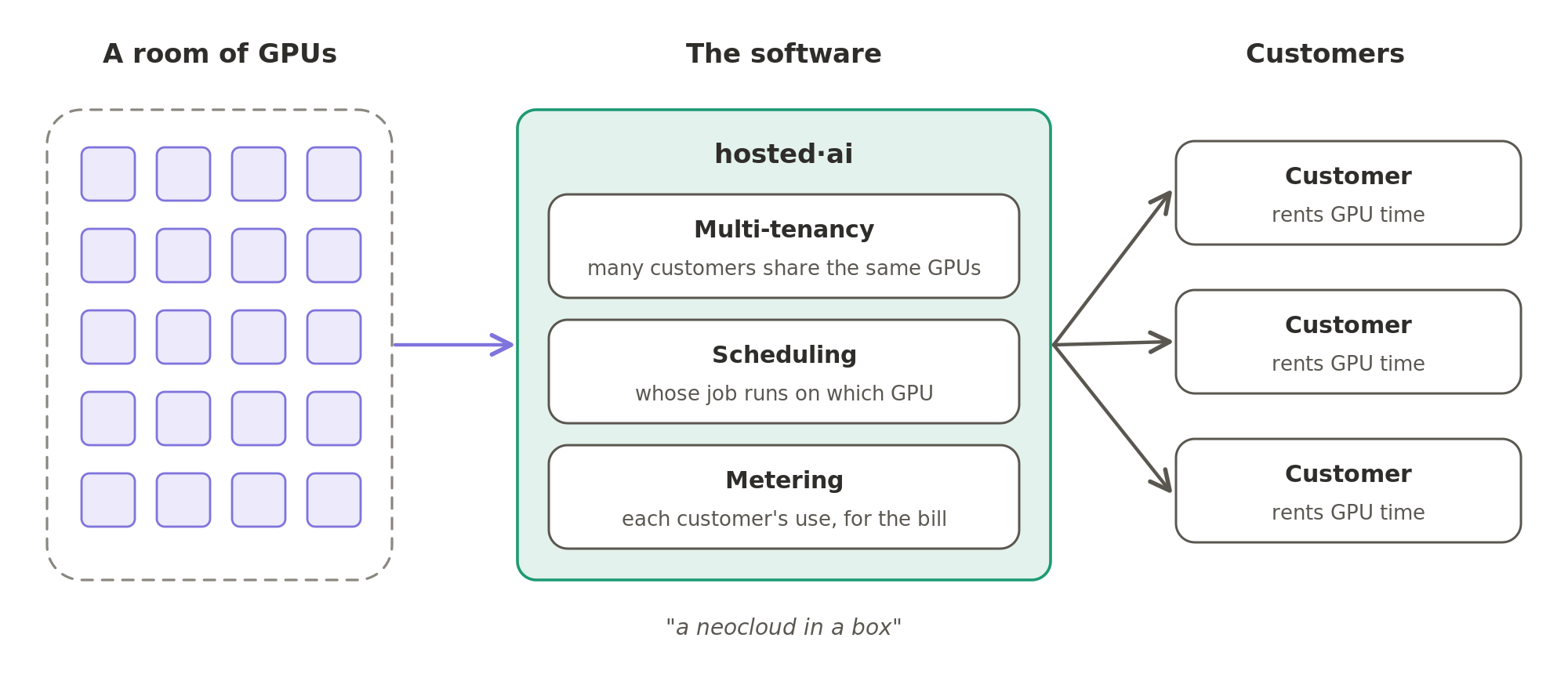
The Pune start-up is happy to rent its servers. Not every organisation is. More and more governments, telecom operators and regulated industries, such as banking, want a cloud that stays inside the country and under their own control. This is called a sovereign cloud. A new kind of company sells these organisations the software to run one.
Some of that computing also has to happen at the edge. The edge means small sites close to the users or machines that need the computing, such as a telecom tower or a factory. It is the opposite of one large data centre far away.
One company here works on the customer's side instead. It does not help anyone run a cloud. It helps a company look after the cloud it already rents.
Two things are pushing the same way. Governments want their data kept inside the country. And GPUs have been scarce, so whoever owns a room full of them can sell GPU time. Both push telecom operators, governments and data-centre owners to run a cloud of their own, instead of renting one. To do that, they need software.
Back to the Pune start-up. Before customers can find the app's website, the team needs four things:
This is the oldest business in this Market Segment. It is usually the first thing a small company pays for, and the same companies often sell all four together.
Three of the companies here belong to one group,
Two more companies here are not part of Newfold:
Back to the Pune start-up once more. Its app is now popular, with users from Guwahati to Kochi. They all reach the same server, which is far away from many of them. So the team puts a content-delivery network (CDN) in front of its website.
A CDN is a network of servers placed in many cities, close to the users. It keeps copies of a website's pages and images, so each user gets them from a nearby server. Every visit to the website passes through the CDN. That makes it a good place to block attacks too.
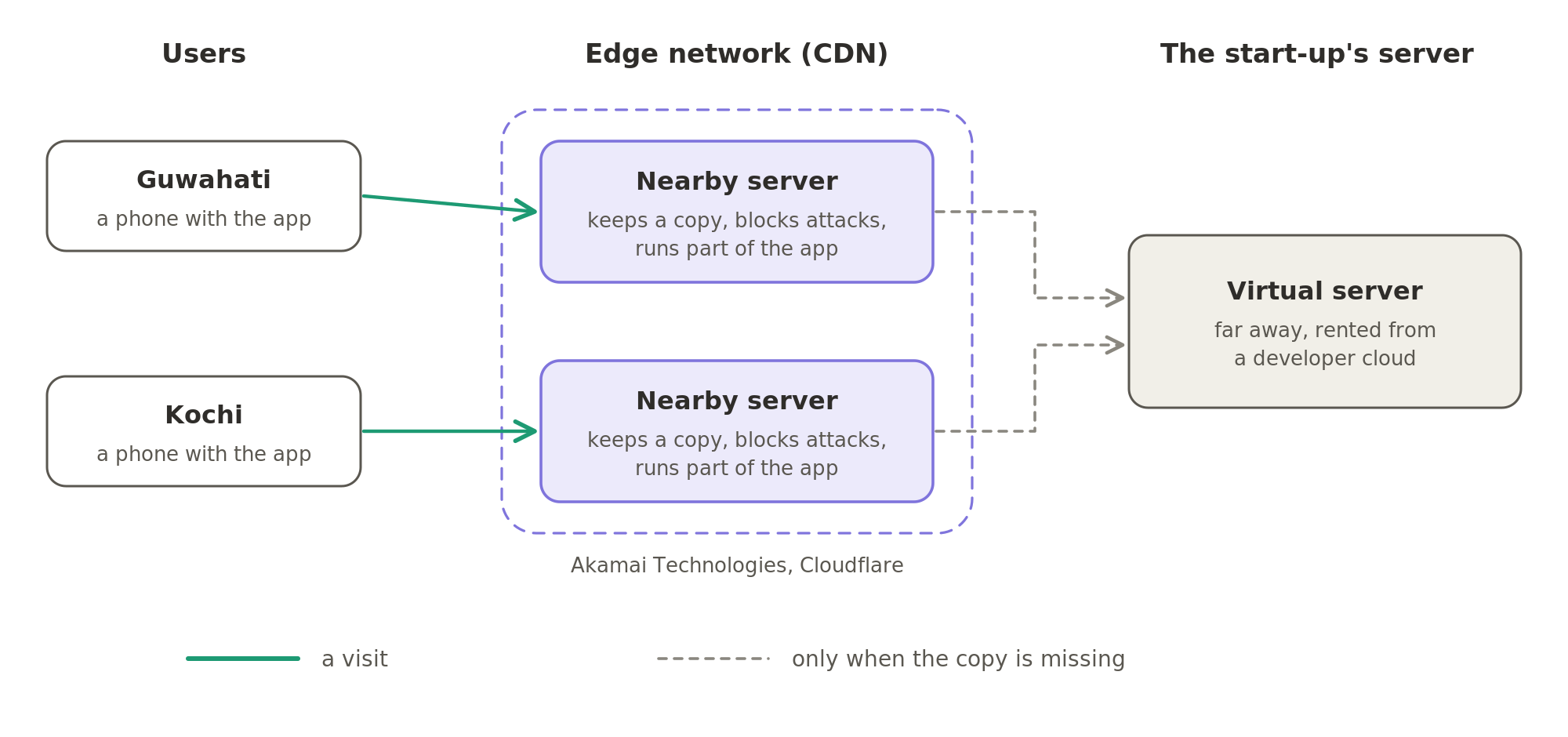
Two companies grew from this idea into security, and then into clouds of their own. Both are covered mainly in another Market Segment.
For the Pune team, this means part of its app's code can run on the CDN's servers, close to each user. The network built to deliver and protect websites has become a place to run them.
Who these companies hire, and for what, is on What cloud providers and OS makers hire for.