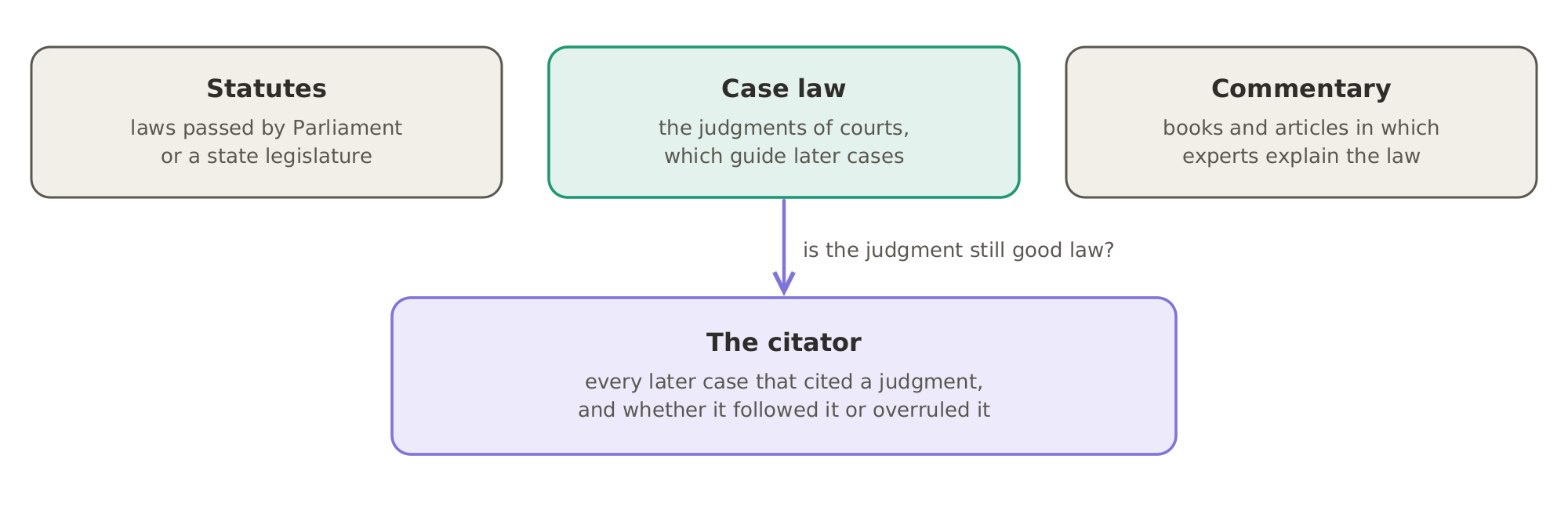
What a lawyer looks for. Legal research draws on three kinds of material:
A lawyer also has to check that each judgment is still good law, meaning no later court has overruled it. A tool called a citator shows every later case that cited a judgment, and whether that case followed it or overruled it.
Who sells it. A handful of publishers own the great legal databases. In America and Britain, two research services lead: Westlaw, from
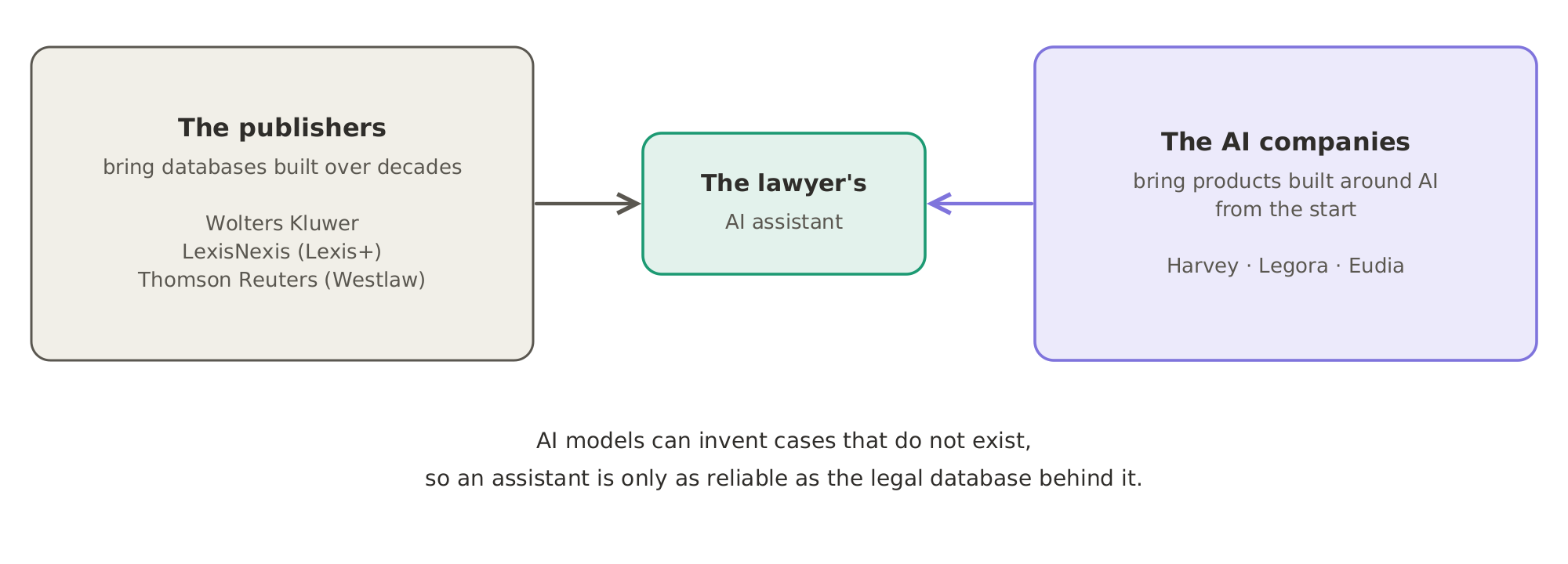
What changed. Generative AI has changed this desk faster than any other part of law. An AI assistant can answer a legal question in plain English, draft a research memo or summarise a hundred judgments. The legal publishers and a new wave of AI companies are now racing to build the assistant every lawyer uses. The publishers bring databases they have built over decades. The AI companies bring products built around AI from the start.
The database matters because AI models can invent cases that don't exist. Lawyers in America have been fined for citing such made-up cases in court. An assistant is only as reliable as the legal database behind it.
India's part. The legal publishers run large engineering centres in India, where they build much of their research platforms.
Every company named here has posted software engineering jobs in India. Famous companies that don't actively hire software engineers in India are left out.
Keep reading, free
One more section is on this page: Research databases and AI assistants. Sign in to read it here, in full.
Continue with Google- Research databases and AI assistants
The publishers
The AI companies
One company here works for the public instead
In a law firm, junior lawyers are called associates. Their early work is research memos, first drafts of the documents filed in court, called briefs, and reviewing hundreds of documents. That is the work the legal AI companies automate first.
Who these companies hire, and for what, is on What legaltech companies hire for.