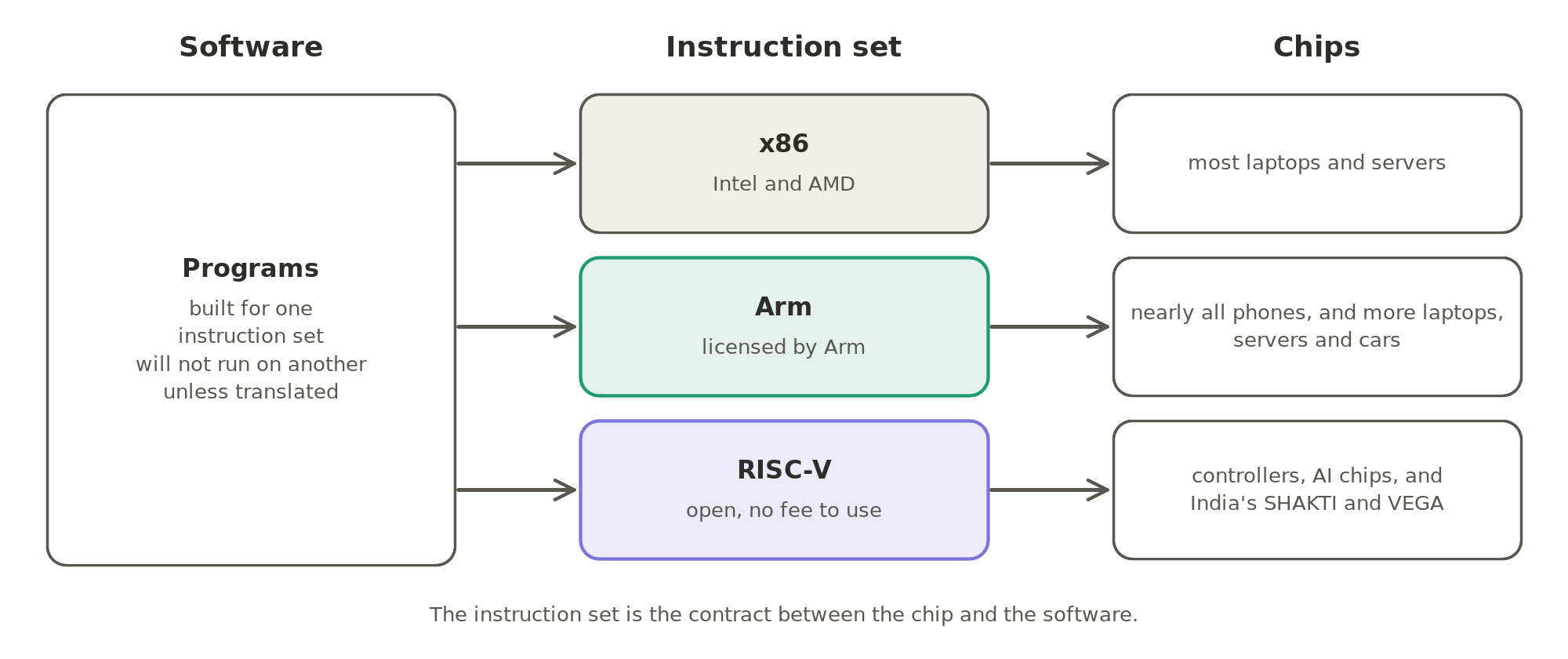
The instruction set. Every processor understands a fixed set of basic commands, such as add, compare and jump. This set is called its instruction set architecture, or ISA. It is the contract between the chip and the software. A program built for one ISA will not run on a chip with another ISA unless it is translated. There are three main ISAs today:
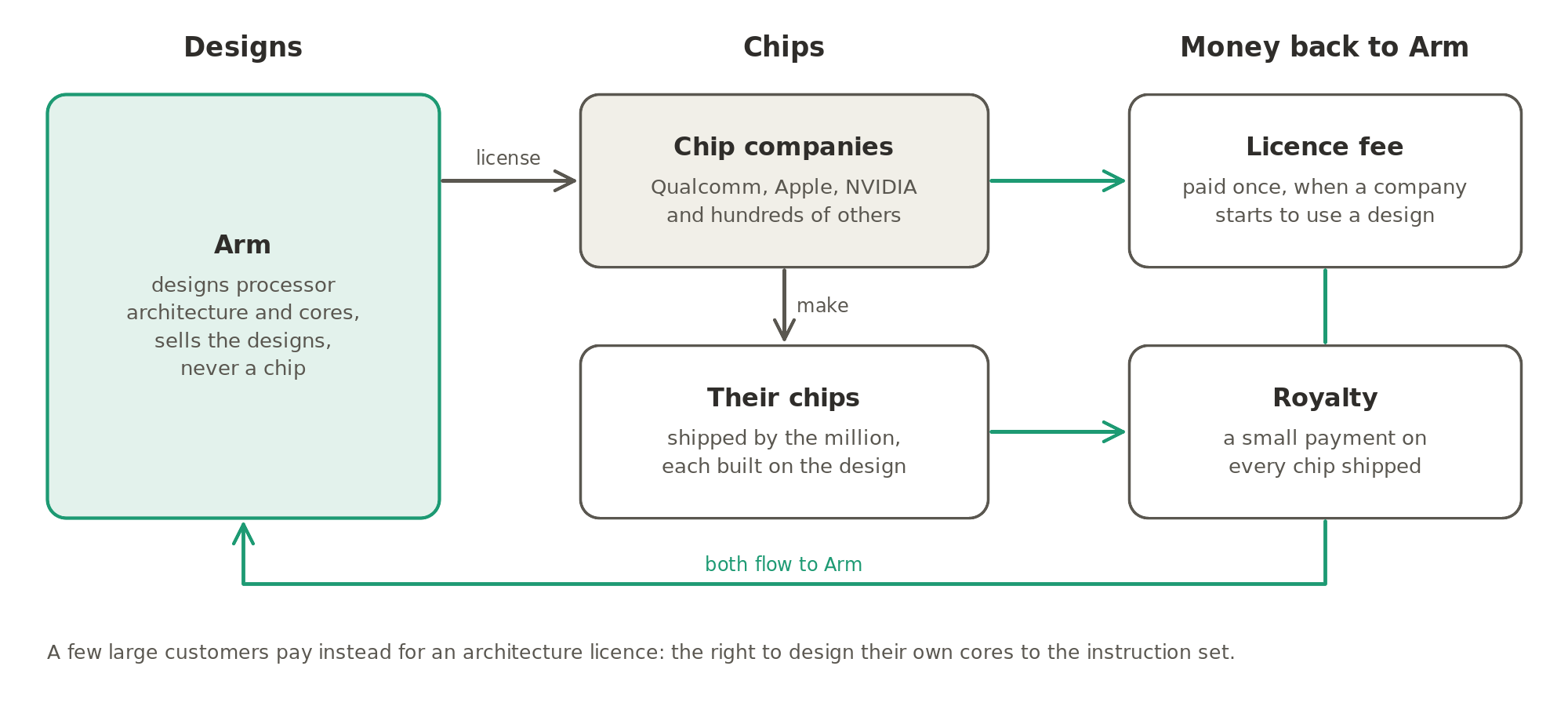
Selling designs instead of chips. Designing a processor core from scratch costs a great deal and takes years. So most chip companies license ready-made designs for parts of the chip from specialists, such as a processor core or a graphics engine. The industry calls these designs semiconductor IP, for intellectual property. The IP company earns in two ways:
A few large customers pay instead for the right to design their own cores to the ISA. This is called an architecture licence.
RISC-V, the open rival. No one owns the RISC-V instruction set, so there is no fee to use it. Companies still earn from it by selling RISC-V cores and the tools to use them. India's own processor projects are built on RISC-V, such as SHAKTI from IIT Madras and VEGA from C-DAC.
Every company named here has posted software engineering jobs in India. Famous companies that don't actively hire software engineers in India are left out.
Keep reading, free
One more section is on this page: Processor and graphics designs for licence. Sign in to read it here, in full.
Continue with Google- Processor and graphics designs for licence
The Arm architecture
Graphics engines
RISC-V
RISC-V lets any company build a processor without paying for the instruction set. It is spreading from small controllers to phones, cars and AI chips. India's own processor projects are built on it, and so is much of the new industry building AI chips.
Who these companies hire, and for what, is on What semiconductor and chip design companies hire for.