ingrid.fyi India's software hiring trends, explained.
Sign in to ingrid.fyi with Google
Your Google account
name@gmail.com
Continue with Google
Home / Product companies / XI · Traditional industries going digital / Legaltech / eDiscovery software
On this page
eDiscovery software Sifting the evidence, every email and document in a lawsuit In a lawsuit in America, each side can demand to see the other side's evidence. A company being sued may have to hand over every email, chat message and document that touches the case. For a large company, that can mean millions of files. The same can happen when a regulator investigates a company. This stage of a lawsuit is called discovery. When the evidence is electronic, it is called e-discovery.

The steps of e-discovery

Preserve: the company stops relevant data from being deleted. This is the legal hold. (More on legal holds in Market Segment 43.3, Legal practice and matter management software.) Collect: the data is copied from email servers, chat apps, laptops and cloud storage. Process: duplicate copies are removed, and the text is pulled out so that it can be searched. Review: lawyers decide which documents are relevant to the case, and which are privileged. Privileged documents, such as advice from the company's own lawyers, don't have to be handed over. Produce: the relevant documents are handed to the other side.

Software that handles these steps is called e-discovery software.
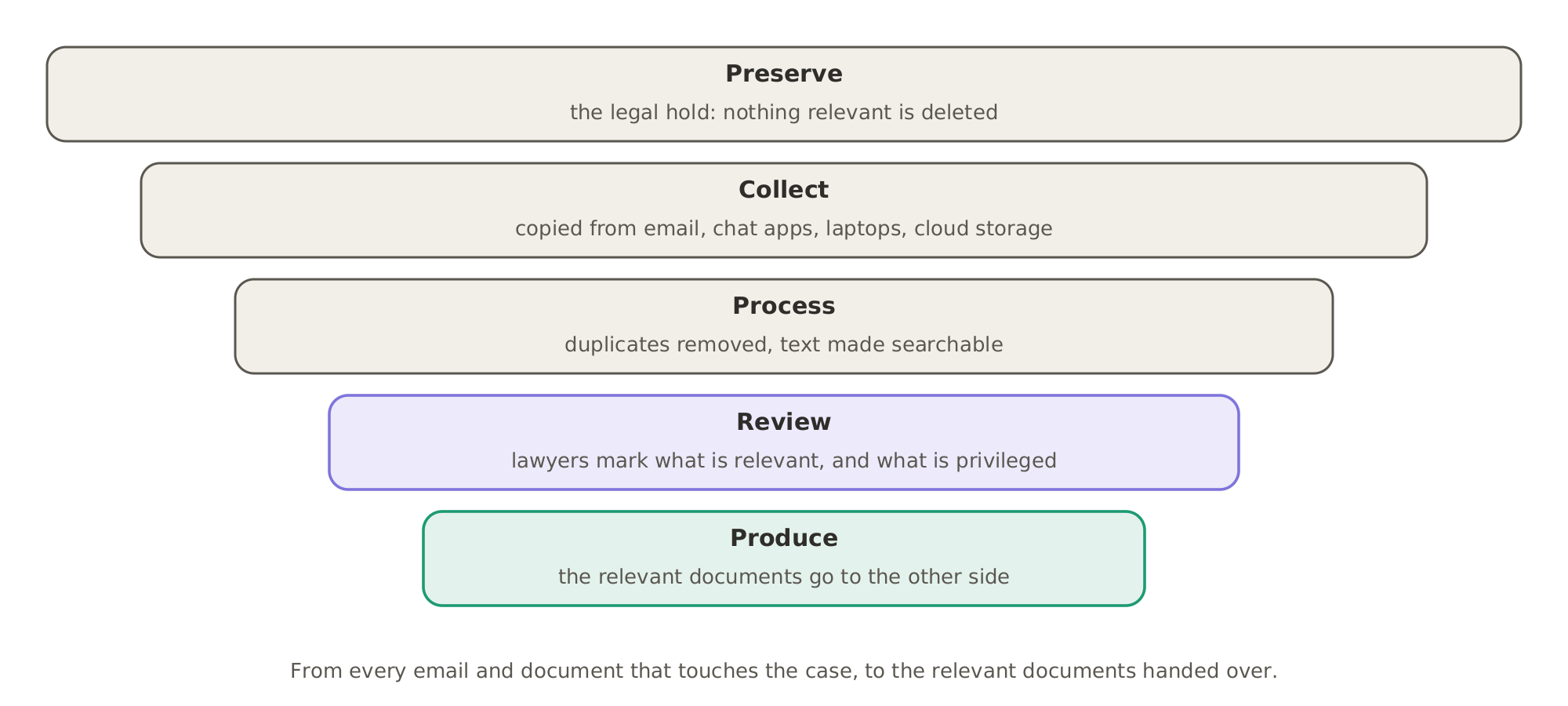
The steps of e-discovery: preserve the data under a legal hold, collect it, process it so it can be searched, review it for what is relevant and what is privileged, and produce the relevant documents for the other side. At each step there is less data.The steps of e-discovery: preserve the data under a legal hold, collect it, process it so it can be searched, review it for what is relevant and what is privileged, and produce the relevant documents for the other side. At each step there is less data.

Why review costs so much. Review is the expensive step. Traditionally, lawyers read the documents one by one and are paid by the hour. It is among the largest costs of a lawsuit in America. Software has helped for years. Lawyers review a sample, and machine learning uses their decisions to rank the rest by how likely each document is to matter. The industry calls this technology-assisted review. American courts have accepted it since 2012.
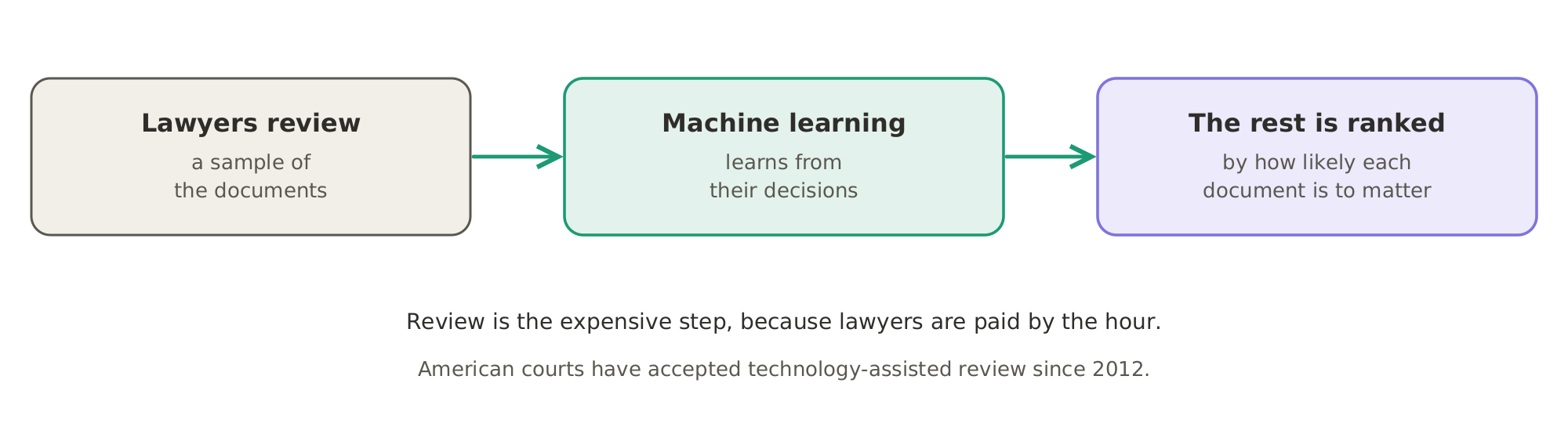
Technology-assisted review: lawyers review a sample of the documents, machine learning learns from their decisions, and the rest are ranked by how likely each document is to matter.Technology-assisted review: lawyers review a sample of the documents, machine learning learns from their decisions, and the rest are ranked by how likely each document is to matter.

Where the market is. Discovery is far broader in American courts than in India or most other countries. So most e-discovery software is sold in America, to law firms and to companies' legal departments. Much of the human review has been done by legal-services teams in India. This business is called legal process outsourcing.

Every company named here has posted software engineering jobs in India. Famous companies that don't actively hire software engineers in India are left out.

Keep reading, free

One more section is on this page: E-discovery platforms. Sign in to read it here, in full.

Continue with Google
  • E-discovery platforms
E-discovery platforms DISCOwith engineers in Delhi, sells a cloud e-discovery platform. Its AI assistant for reviewing evidence is called Cecilia. DISCO has the most job postings in this Market Segment. Revealwith engineers in Hyderabad, sells e-discovery to law firms and companies, along with AI that reviews documents. Its products include Logikcull, an e-discovery product now part of Reveal. The review done by AI.

Document review was the first legal work handed to machine learning. Newer AI models can also explain why they marked a document as relevant, in a way a court can follow. Much of the human review that remains has been done by legal-services teams in India. It is the work that AI replaces most directly.

That is e-discovery: finding, reviewing and handing over the evidence in a lawsuit. It is sold mostly in America, and AI now does more and more of the review.
Who they hire

Who these companies hire, and for what, is on What legaltech companies hire for.

Privacy Terms Refunds and cancellation Shipping and delivery © 2026 ingrid.fyi · Payments by Razorpay
You're browsing as a guest. Sign in free to follow links for five minutes, once an hour.