ingrid.fyi India's software hiring trends, explained.
Sign in to ingrid.fyi with Google
Your Google account
name@gmail.com
Continue with Google
Home / Product companies / VIII · Gaming, streaming and media / Streaming and broadcast / Broadcast technology
On this page
Broadcast technology The broadcasters and their kit, the control rooms that keep a channel on air Watch a cricket match on TV. A dozen cameras follow the play, a replay appears seconds after a wicket, the score sits in a corner of the screen, and ads run between overs. All of it is controlled from a room that viewers never see. A television channel on air depends on equipment most people have never heard of.

How a channel gets on air

The feeds. Cameras and microphones send their pictures and sound, called feeds, to a control room. The control room. A director chooses which camera to show. Operators add replays, graphics and the score. Playout. The playout system sends out each programme and each ad at exactly the right time, around the clock. Getting to homes. In India, most channels reach homes through cable operators and DTH (direct-to-home satellite) services. Many are now also streamed. (More on streaming in Market Segment 32.2, Video streaming technology.)

The equipment

Routerswhich switch video signals between hundreds of sources and destinations inside a studio. Replay systemswhich record every camera and play back any moment within seconds. Monitoringwhich catches a black screen, silence or wrong sound within seconds.

How broadcasters earn. A broadcaster earns from the ads shown on its channels, and from the fees that cable and DTH operators pay to carry them. Live sport draws the largest audiences, and so the highest prices for ads.
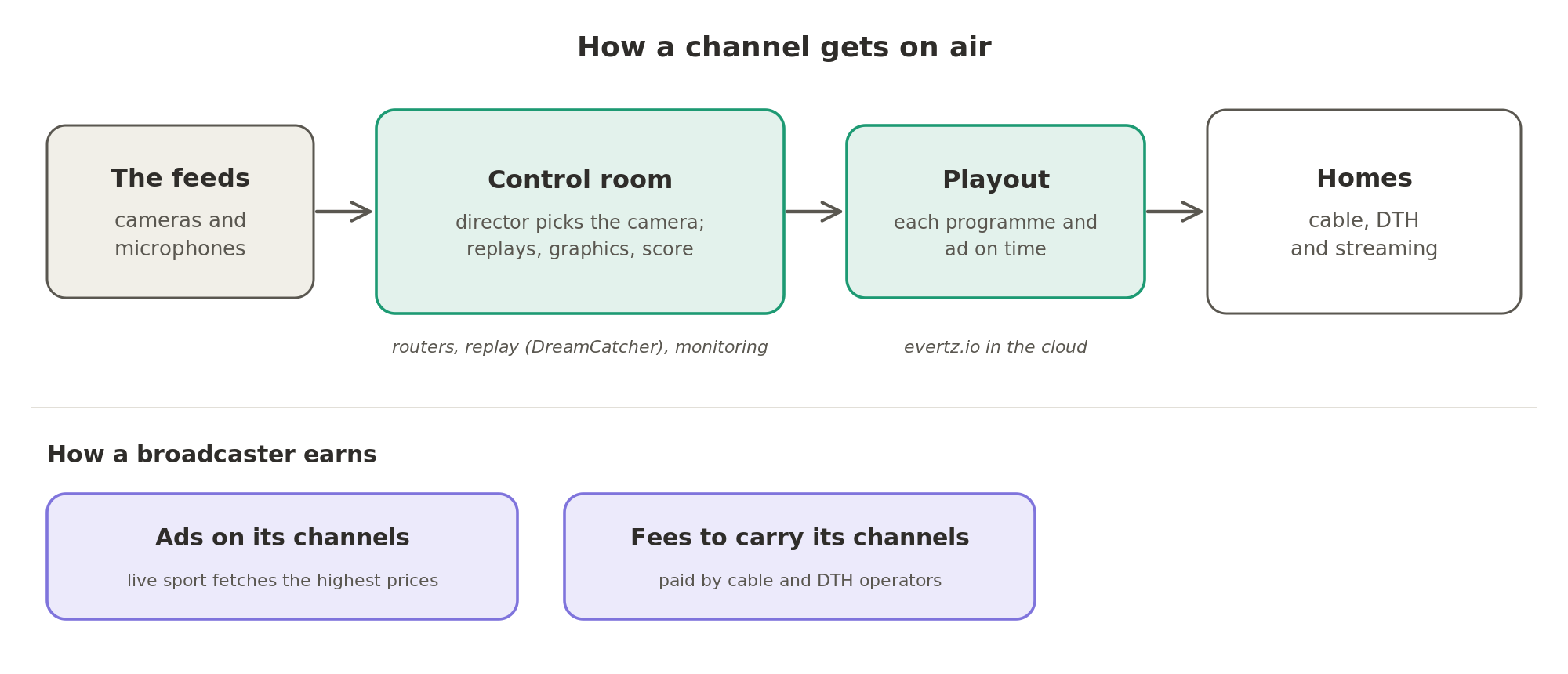
A channel gets on air as feeds from cameras and microphones go to the control room, then to playout, then to homes by cable, DTH and streaming; a broadcaster earns from ads and from fees to carry its channels.A channel gets on air as feeds from cameras and microphones go to the control room, then to playout, then to homes by cable, DTH and streaming; a broadcaster earns from ads and from fees to carry its channels.

From trucks and cables to software. A live sports broadcast used to need a truck full of equipment at the ground, called an outside-broadcast van. The equipment inside a studio was joined by special video cables. Now the signals travel over ordinary computer networks, and much of the equipment is becoming software that runs in the cloud. The cameras at the ground can send their feeds to a control room in another city. This is called remote production.
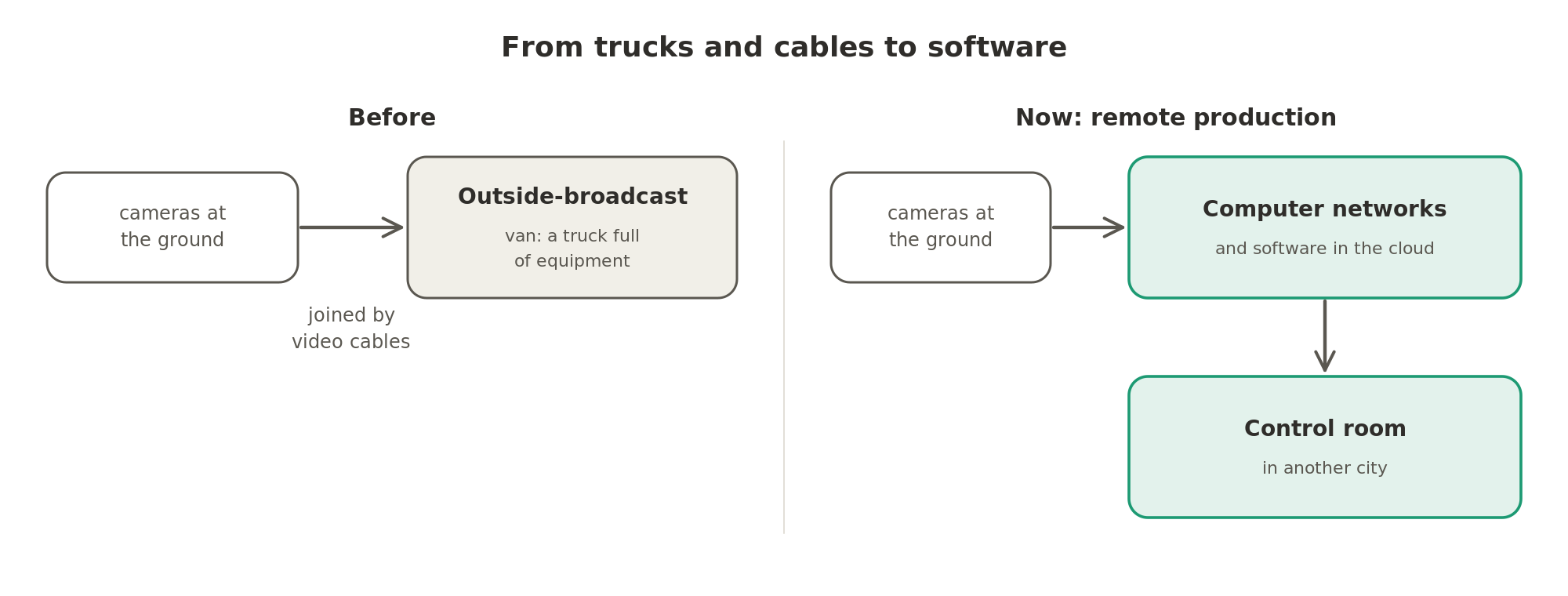
A live broadcast once needed an outside-broadcast van at the ground; in remote production, the cameras send their feeds over computer networks to a control room in another city.A live broadcast once needed an outside-broadcast van at the ground; in remote production, the cameras send their feeds over computer networks to a control room in another city.

Every company named here has posted software engineering jobs in India. Famous companies that don't actively hire software engineers in India are left out.

Keep reading, free

One more section is on this page: Broadcast equipment and India's largest broadcaster. Sign in to read it here, in full.

Continue with Google
  • Broadcast equipment and India's largest broadcaster
Broadcast equipment and India's largest broadcaster

Broadcast equipment

Evertzthe Canadian maker of broadcast equipment and software, has engineers in Bengaluru. It sells signal routers, and DreamCatcher, a replay system used in live sport. It also sells evertz.io, which runs a channel's playout from the cloud.

One company covered mainly in another Market Segment also works here:

JioStarwith engineers in Bengaluru, is India's largest broadcaster. It runs the Star and Colors channels, and their live sport. JioStar has more job postings than any company covered mainly in this Market Segment. (More on it in Market Segment 32.1, OTT and live streaming platforms.) The control room in the cloud.

A live sports broadcast once needed a truck full of equipment at the ground. Now the cameras send their feeds to the cloud, and a director in another city cuts the match. AI models add the replays, the graphics and commentary in other languages. The broadcast truck is becoming software.

That is the business of broadcasting: the control rooms, replay systems and playout that keep a channel on air, now moving from trucks and cables to software in the cloud.
Who they hire

Who these companies hire, and for what, is on What streaming and broadcast companies hire for.

Privacy Terms Refunds and cancellation Shipping and delivery © 2026 ingrid.fyi · Payments by Razorpay
You're browsing as a guest. Sign in free to follow links for five minutes, once an hour.