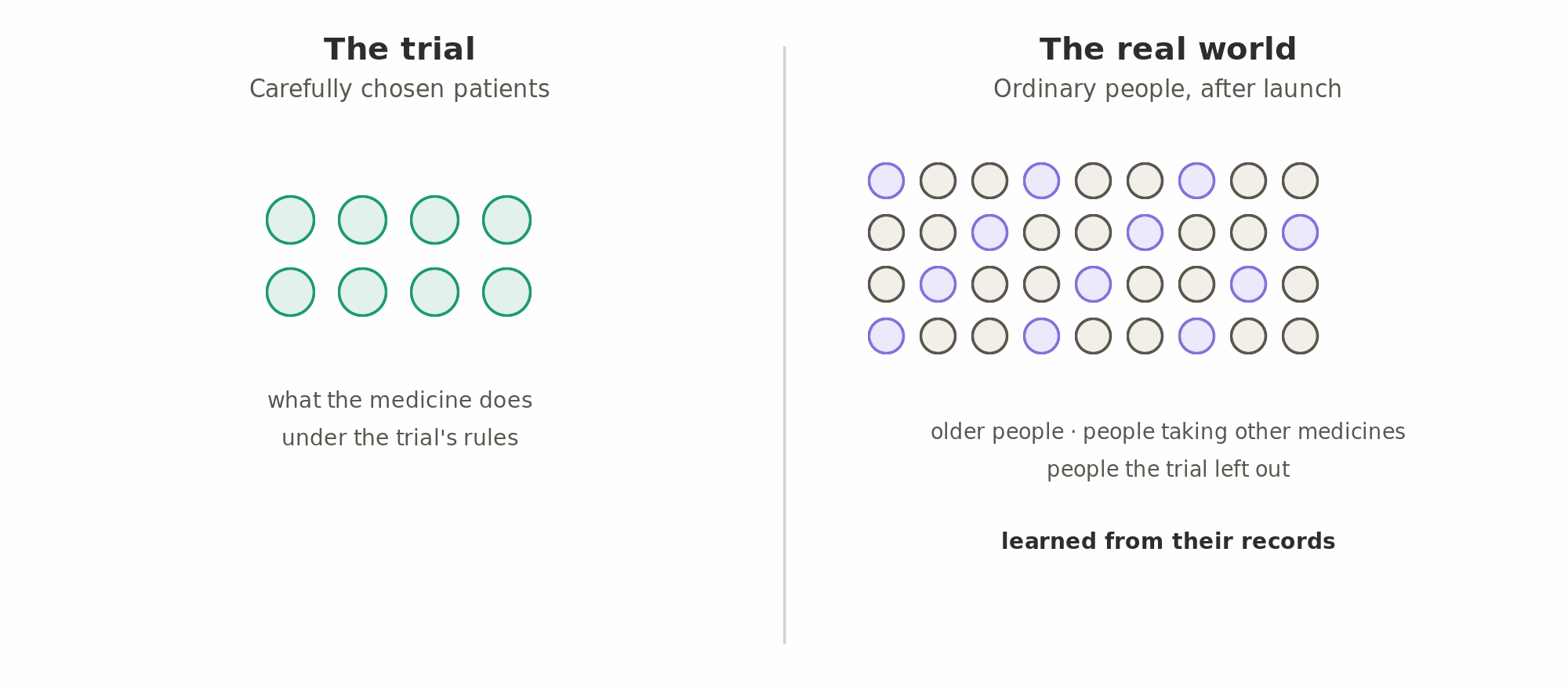
A trial shows what a medicine does in a few thousand carefully chosen patients. What it does in millions of ordinary ones is learned afterwards, from their records. This is called real-world evidence: the analysis of health records and insurance claims, with the patients' names and details removed, which is called de-identified data. Real-world evidence is used for three things:
- to find new uses for a medicine
- to watch for rare side effects, which only show up across millions of patients
- more and more, to support the decisions of drug regulators
This is the last Market Segment of Industry Vertical 25, and of Domain VI, Healthtech and life sciences. It covers three companies that sell real-world evidence. The buyers are drug companies, researchers and regulators.
Every company named here has posted software engineering jobs in India. Famous companies that don't actively hire software engineers in India are left out.
Keep reading, free
One more section is on this page: What this section holds. Sign in to read it here, in full.
Continue with Google- What this section holds
Back to the two million people who used the skin cream, from the start of this Market Segment. Their records are scattered across many hospitals and insurers. The companies here bring them together and read them.
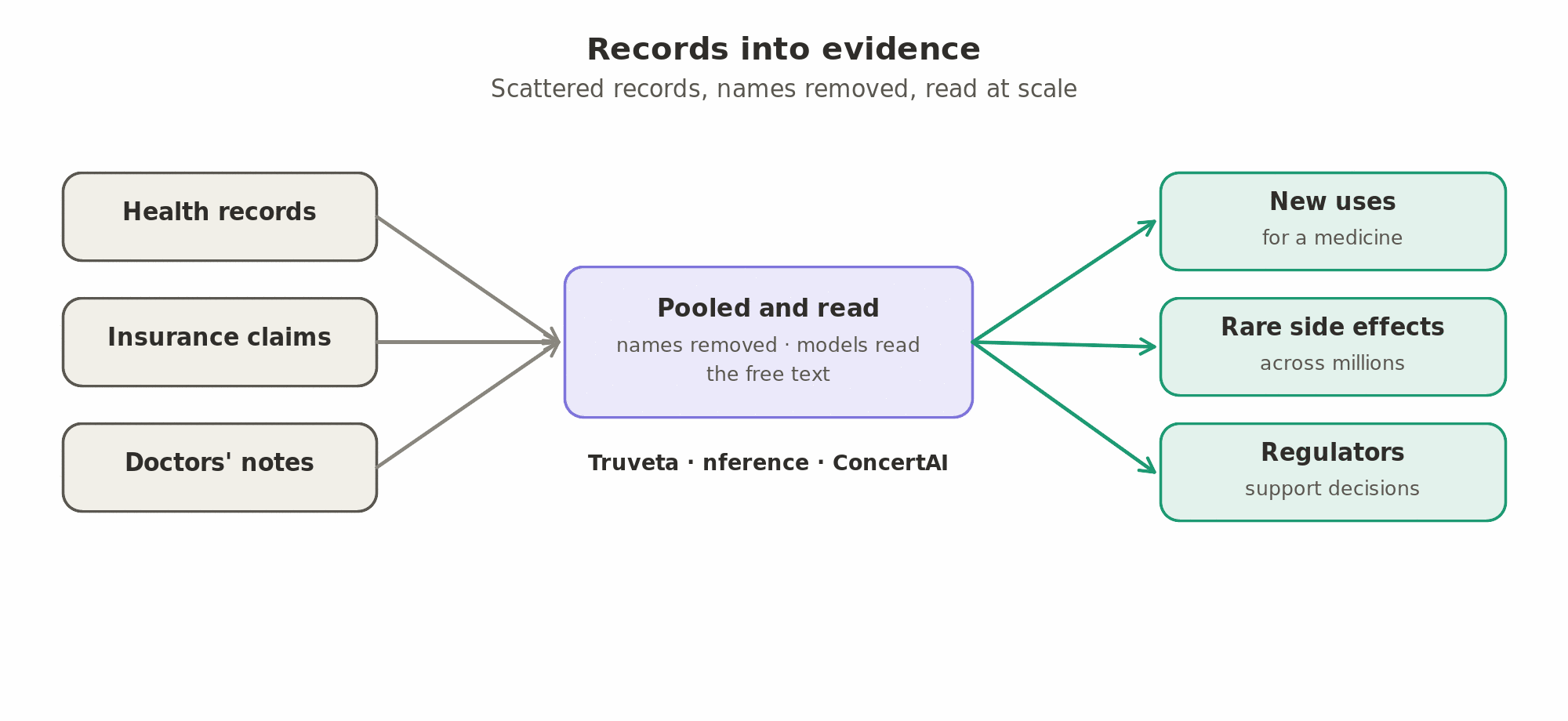
Most of what happens to a patient is written in free text, such as doctors' notes. AI models now read it at scale, and turn records into evidence that regulators accept. The frontier is a trial run partly on real-world data. In such a trial, the comparison group of patients is drawn from records, instead of being enrolled.
Who these companies hire, and for what, is on What pharma and life sciences companies hire for.